An introduction to a lecture

Do the preparation task first. Then listen to the audio and do the exercises.
Listen to the introduction of a psychology lecture to practise and improve your listening skills.
Preparation
See More
Transcripts
See MoreGood afternoon, everyone. Welcome to the first lecture of our new course in Positive Psychology. While some people may associate psychology with looking at what’s wrong with us, and at what problems we have, there is much more to psychology than that. Positive psychology, for example, looks at how to help people become happier.
This lecture begins with a question: what makes a happy life?
Now, I’m going to give you one possible answer. A happy life is a life in which you are completely absorbed in what you do. Now, how does this compare with what you and your partner said?
This answer comes from the work of Mihaly Csikszentmihalyi and the theory of flow. Csikszentmihalyi is a psychologist who has spent much of his professional life on the study of what makes people happy and how we can find happiness.
Csikszentmihalyi suggests the theory that happiness is not caused by external events or things that happen to us. Our perception of these things and how we see these events either makes us happy or sad. In other words, if we want happiness, we have to actively look for it. However, this does not mean that we should always look for happiness! Csikszentmihalyi believed that our happiest moments happen when we are in a state of flow.
The theory of flow can be summarised like this: when we are totally involved in, or focused on, what we are doing, we are in a state of flow.
Csikszentmihalyi got the inspiration for this theory when he noticed how artists worked in a studio. They completely lost track of time, they didn’t notice they were hungry or tired, and they could work for hours, even days, without stopping. Anyone I have spoken to who has experienced this state of concentration has said it’s difficult to explain. The best way to explain it is that it is like being in a river and the flow of the water carries you away.
For the rest of this lecture, I will explore this theory of flow in more detail. First we will look at Csikszentmihalyi’s life, and how it influenced his ideas. Then we will look at the conditions that go with a state of flow. What creates flow, exactly? Finally, we will look at activities that can help us achieve flow in our everyday lives. Will this course make you happy for life? Well, maybe. Maybe.
Right, let’s get started. If you look at the next slide …
Task 1
See More
Task 2
See More
Facts and figures

Listen to the lecturer giving some facts and figures to practise and improve your listening skills.
Do the preparation task first. Then listen to the audio and do the exercises.
Preparation
See More
Transcript
See More… and the next part of this talk is on the Panama Canal. It’s amazing how this one small section of a small country can be so important to the world. Let’s learn a little bit about the canal itself, before we look at how it connects to everything else.
The Panama Canal is an artificial waterway in the Central American country of Panama that connects the Atlantic and Pacific Ocean. It is only 82 kilometres long. If you go around South America by ship then you need to travel another 15,000 kilometres. So the canal saves a lot of travel time. It takes around 8 to 10 hours to cross the canal.
The French started building the canal in 1881, but they couldn’t finish it. The project was started again in 1904 by the United States and the canal was finally finished in 1914. Many people died while they were building the canal, some say up to 25,000. For the rest of the 20th century, the United States controlled the canal, but gave control back to Panama in 2000.
Every year, around 40,000 ships come through the canal. These are mostly commercial ships. They transport goods for trade between Asia and America, or Europe. In 2016 the government of Panama made the canal bigger, so that now 99 per cent of ships can pass through it.
Let’s now turn to the role of the Panama Canal in the global economy …
Task 1
See More
Task 2
See More
Changing plans

Listen to two people talking about changing their plans to practise and improve your listening skills.
Do the preparation task first. Then listen to the audio and do the exercises.
Preparation
See More
Transcript
See MoreFrancesco: Sachi? Sachi? Sachiko!
Sachi: Francesco! Is everything OK?
Francesco: Yes. Yes. Sorry, I saw you and I was across the street … I ran.
Sachi: I see. What’s up?
Francesco: Do you have the tickets … for the play?
Sachi: No, I don’t. I’m going to buy them this afternoon.
Francesco: Oh good, good. Listen, don’t buy tickets for this Friday.
Sachi: Oh? Why not?
Francesco: I can’t go to the theatre on Friday. Something’s come up. I have a concert this Friday.
Sachi: Another concert? But you said …
Francesco: I know, I know. I’m sorry. I forgot.
Sachi: Francesco!
Francesco: How about next week? Are you free then? I can definitely go next Friday.
Sachi: Francesco. You did this two weeks ago, remember? I had cinema tickets for the new Marvel movie and you changed the plans then too. For band practice.
Francesco: I know, and I …
Sachi: We also missed my favourite dance group. Because your band was playing at some child’s birthday party.
Francesco: It was my nephew’s birthday …
Sachi: Ha!
Francesco: OK, why don’t we go out for dinner before my concert? Then, next Friday we can go to the play.
Sachi: Oh …
Francesco: Come on, Sachi. Just this one more time.
Sachi: OK, but promise me next Friday. OK?
Francesco: I promise. I promise!
Task 1
See More
Task 2
See More
Changing a meeting time

Listen to two colleagues arranging a meeting to practise and improve your listening skills.
Do the preparation task first. Then listen to the audio and do the exercises.
Preparation
See More
Transcripts
See MoreLucy: Hi, Anna. Do you have a minute to talk about the meeting next Tuesday?
Anna: Sure. We said 11, didn’t we?
Lucy: Yeah, we did. But I have a bit of a problem with the time. Would it be possible to move it?
Anna: Oh, I see. We could postpone it to the afternoon, to 1 p.m., for example. Or bring it forward to earlier in the morning. What would suit you?
Lucy: Could we make it 9 o’clock? That would really help me. I have another important meeting in the central office at 12.
Anna: No problem. It’s important you’re there.
Lucy: Thanks a lot, Anna.
Anna: Do you need help with any preparation? Did you get the agenda I sent out?
Lucy: Yes, I did. And no, that’s all fine, thanks. My report is ready and I’m looking forward to presenting it.
Anna: Great.
Lucy: I can tell Sven about the time change. I’ll see him later.
Anna: Don’t worry about telling Sven. I’ll send an email to everyone to confirm the time has changed and with an updated meeting invite.
Lucy: Great. Thanks, Anna.
Anna: OK. I’m happy that works for you. We really need you there and it’s good we don’t have to cancel it.
Lucy: See you then. Have a good weekend in the meantime.
Anna: You too.
Task 1
See More
Task 2
See More
Finding the library

Listen to a conversation about the university library to practise and improve your listening skills.
Do the preparation task first. Then listen to the audio and do the exercises.
Preparation
See More
Transcript
See MoreStudent: Hi. Excuse me.
Student B: Yes?
Student: Where’s the library?
Student B: The library? It’s next to the registration office.
Student: Ah … sorry, I’m new. Where’s the registration office?
Student B: No problem. See the big building over there?
Student: Yes.
Student B: OK, so that’s the lecture theatre. Next to that, on the right, is the registration office. And next to that is the library.
Student: I see. Thanks!
Student: Hello?
Librarian: Hello.
Student: Is this the library?
Librarian: Yes, it is. Quiet, please.
Student: Oh, sorry. Thank you.
Librarian: Can I help you?
Student: Er, yes, please. I want to borrow some books. What do I need?
Librarian: You need a library card. Here’s the application form. You can take up to six books maximum today.
Student: OK. Six books.
Librarian: Yes. You have two weeks to read the books. Then you bring them back.
Student: And if I’m late?
Librarian: Every day you are late there is a fee of fifty pence.
Student: OK, 50p a day. Er, anything else?
Librarian: Mobile phones must be switched off in the library. You can bring your laptop, but please use headphones to watch videos or listen to music.
Student: OK, great.
Librarian: And you can’t bring food or drink.
Student: No food, no drink. And …?
Librarian: And please speak quietly! People are working here.
Student: Oh! Oh, OK. Thank you.
Librarian: You’re welcome.
Task 1
See More
Task 2
See More
Business cards

Listen to four people talk about their jobs to practise and improve your listening skills.
Do the preparation task first. Then listen to the audio and do the exercises.
Preparation
See More
Transcript
See MoreA
A: Hello, Doctor Miller. It’s nice to meet you.
B: Please call me Peter.
A: OK. Are you a medical doctor? It must be helpful when you sell medical equipment.
B: Actually, no. My doctorate was in electronic engineering, but it’s still helpful for me when I sell our equipment.
B
Good morning, everyone. I’m happy to be here today to tell you about our new project. My name is Alessandro Rossi. I’m the project leader on the Starlight programming project.
C
Pleased to meet you. Here’s my card. My real name is Megumi Tanaka, but people who are not from my country think it’s difficult to say my name, so I use another name, Meg, when I’m working internationally.
D
Hello, everyone. My name’s Andres Mulligan. I’m very happy to be joining this team for the next few months and learning more about research and development.
Reading text
See More1.
| DX Medical Equipment Ltd | Dr Peter Miller Sales Director |
2.
*Space10 Designs* | Alessandro Rossi Lead Programmer |
3.
| Global Engineering Consults | Megumi Tanaka Product Manager |
4.
| MaXtin Ltd | Andres Mulligan Jr Intern, R&D team |
Task 1
See More
Task 2
See More
A lecture about an experiment
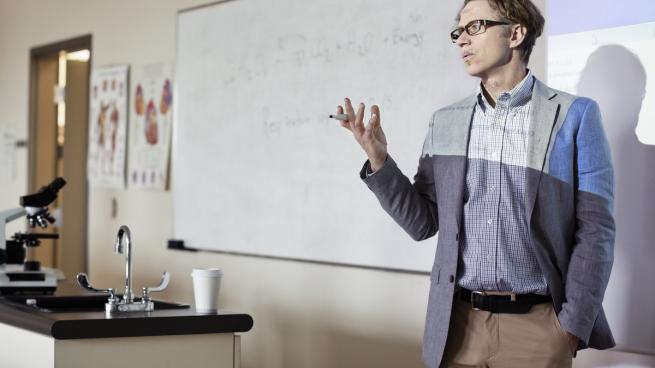
Listen to the lecture about a science experiment to practise and improve your listening skills.
Do the preparation task first. Then listen to the audio and do the exercises.
Preparation
See More
Transcript
See MoreIn today’s lecture we’re going to be talking about experiments, and I thought it might be interesting for you all to learn about the world’s oldest continuously running laboratory experiment that is still going today. In fact, it holds the Guinness World Record for being the longest-running experiment. This experiment began in 1927 and has been going ever since.
It’s called the ‘pitch drop’ experiment and it was created by Professor Thomas Parnell at the University of Queensland, Australia. Parnell was the university’s first physics professor, and he wanted to show in this experiment that everyday materials, such as pitch, can have quite surprising properties.
You see, when pitch is at room temperature, it feels solid. You can easily break it with a hammer. However, it isn’t in fact solid. At room temperature, pitch is many billions of times more viscous than water, but it’s actually fluid.
In 1927, Professor Parnell took a sample of pitch. He heated it and poured it into a glass funnel. He allowed the pitch to cool and settle – for three years. He then turned the funnel upside down and cut the top off it.
Since then, the pitch has slowly dropped out of the funnel. How slowly? Well, the first drop took eight years to fall. It took another forty years for another five drops to fall. Today it’s been almost 90 years since the experiment started. Only nine drops have fallen from the funnel. The last drop fell in April 2014 and the next one is expected to fall in the 2020s.
The experiment has a tragic story associated with it. Professor Parnell died without seeing a pitch drop. His replacement, Professor John Mainstone, became responsible for the pitch drop experiment from 1961. He held the job for 52 years, and missed seeing the drop fall three times – by a day in 1977, by just five minutes in 1988 and finally in 2000, when the webcam that was recording the experiment suffered a power outage for 20 minutes, during which time the pitch dropped.
The pitch drop experiment is something we can all participate in now. There’s a live web stream that allows anyone to watch the glass funnel and wait for the fateful moment. A similar experiment to the Queensland pitch drop was set up in Dublin, and the video of the moment the pitch actually dropped went viral on the internet. It’s interesting to see how a very slow event can spread news so quickly.
Task 1
See More
Task 2
See More
A digital detox podcast

Listen to the podcast about doing a digital detox to practise and improve your listening skills.
Do the preparation task first. Then listen to the audio and do the exercises.
Preparation
See More
Transcript
See More
Presenter: So, we’re back in the studio. Welcome back, everyone. My name’s Rick Walker. From our laptops to our televisions, from the displays on our smartphones to those on our satnavs, we are in front of screens all the time. Have you ever wondered what it would be like to disconnect completely? To choose not to have access to the internet? If you have, you may be in need of a digital detox – a total switch-off from all things digital. The idea of people taking a digital detox is becoming more and more popular, especially amongst young people – and today we’re joined by someone who’s tried a number of digital detox activities and is here to give us some advice about it. Amanda Vince, welcome to the studio.
Amanda: Thank you very much.
Presenter: So, Amanda, you work for a fashion magazine in London, right? I guess your work means you need to be online a lot.
Amanda: Oh, yes. Apart from the hundreds of emails I get every day, I’m always browsing fashion websites, as well as online videos. I also need to be very active online, especially on Twitter and Instagram – sharing what we’re doing in the magazine, interacting with designers, photographers, influencers … it never stops, literally. Then of course there’s my friends and family to keep in touch with online too, and for me, my work grew out of my passion, so friends and work colleagues aren’t two totally separate groups of people and it all gets a bit messy online sometimes. I think I’m online for at least 12 hours a day.
Presenter: So, how did you get the idea for a digital detox?
Amanda: I read a book about it, called Log Off: How to Stay Connected after Disconnecting. The author’s name is Blake Snow. That book gave me some really good advice and made me think about trying to change some of my digital habits. I started with removing distraction.
Presenter: What do you mean by that?
Amanda: That means turning off alerts, buzzes, alarms or notifications of any kind. I had notifications set up for everything, and it meant I was always being forced to look at my phone. Removing all of them except for important contacts helped me focus immediately. The book also made a really good point, that we should ask ourselves ‘Why?’ every time we take out our phone. I realised that most of the times I looked at my phone were because I was trying to avoid or ignore something else happening right in front of me. It was an automatic habit.
Presenter: I have to confess, that happens to me too. But what else are you going to do when you’re standing in line at the bank or waiting for your train?
Amanda: OK, yes, I’m the first to admit that it’s great for helping time go by. But speaking personally, I found I wasn’t just checking my phone to kill time when I was alone. I was also doing it with friends or family around.
Presenter: Hmmm … right. Well, so far, this doesn’t sound too drastic. Turning off notifications and becoming aware of when we use our devices. That sounds easy.
Amanda: Yes, it’s the first step. Once we begin to realise just how much of a grip our devices have on us, then we’re ready to really take the next step. First, my partner and I did a weekend with absolutely no screens. She found it easier than I did. For me, it was a little bit scary at first but it turned out to be a pretty rewarding experience.
Presenter: A whole weekend, huh? I don’t know if I could …
Amanda: I think everyone has to do this at their own pace. If a weekend feels too much, maybe just try for an evening. Then work your way up to more. I guarantee, once you’ve tried it, you’ll want to try it again. We’re going to try for a whole week in the summer.
Presenter: OK, let’s pause there then and see what our listeners have to say. You can call us here directly, or send us a message on any of our social media channels … oops, should I be saying that? Anyway, more after the break.
Task 1
See More
Task 2
See More
An interview about listening skills

Listen to the English teacher talk about listening to practise and improve your listening skills.
Do the preparation task first. Then listen to the audio and do the exercises.
Preparation
See More
Transcripts
See MorePresenter: So, today’s expert teacher is Gabriella, a university English teacher from Leeds. Gabriella, hi and thanks for joining us today.
Gabriella: Thanks for having me!
Presenter: So, I have to confess today’s topic is something I am really bad at: listening. Most people say speaking is the most stressful part of learning a new language but, for me, with my B1 German, speaking isn’t so bad. At least I’m in control of it. But listening … woah … people speak so fast and it’s like my brain just shuts down. Am I just really strange and bad at listening? Tell me, honestly, I can take it.
Gabriella: No, you’re not strange. In fact, it’s really common. You know, in exams most people do pretty well in speaking compared with listening. Of course, exams are a different situation from real life because in an exam you can’t ask for something to be repeated or explained. You usually have just one or maybe two opportunities to listen to the dialogue and then it’s gone.
Presenter: Right, but in real life I feel stupid always saying, ‘Sorry, can you repeat that, please?’, especially if I still don’t understand even when they repeat it. And people out there listening, I hope you don’t do this – quite often the person just repeats what they said equally as fast and I’m still lost!
Gabriella: They do, don’t they? In real life, you’ve got two strategies. One is to pretend to understand and get out of the conversation as fast as you can.
Presenter: Yep, sounds familiar!
Gabriella: But, obviously that’s not going to help if it’s a conversation with high stakes. It might have important consequences. I mean, if you’re just chatting with a stranger at the bus stop, it doesn’t matter. But imagine you’re at a government office or a bank, trying to find out what paperwork you need to get your ID or open a bank account. What can you do then?
Presenter: I hope you’ve got the answer, Gabriella, because I’m coming out in a cold sweat just thinking about either of those situations!
Gabriella: The other strategy is to summarise what they said.
Presenter: But how can you do that if you didn’t understand what they said?
Gabriella: Ah, well, you only start the summary, so you might say, in German in your case, ‘OK, so the first thing I have to do is …?’ and make it a question. Or, for example, ‘And which office is that again?’ Break it down into smaller questions and the other person will naturally start answering them. That way you’re controlling the conversation a bit more.
Presenter: I get you …
Task 1
See More
Task 2
See More
A weather forecast
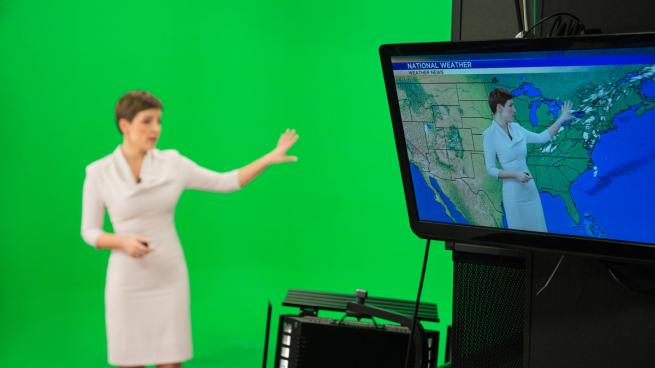
Listen to a weather forecast and answer the questions to practise and improve your listening skills.
Do the preparation task first. Then listen to the audio and do the exercises.
Preparation
See More
Transcripts
See MoreHello and good morning! Well, we’re off to a good start in the south this week, as most of the rain from the weekend has disappeared – just a few patches of cloud and maybe some showers here on the east coast. They’ll all clear up by lunchtime, though. Over the next day or so, London and the area around Kent can expect a couple of isolated showers, but mostly dry through until Thursday.
It’s not such good news for the north-west this week, I’m afraid: more wet weather, and not a lot of sunshine. Some of today’s showers will be heavy – and even thundery in Manchester and across the Pennines. Leeds will escape the thunderstorms, with drizzle and light rain only throughout the rest of the day and tonight.
Elsewhere it becomes dry today, but with some foggy patches towards Wales. In England, tomorrow morning will see a dry, bright start in most places, with high temperatures throughout the week. We might see one or two thunderstorms appearing as the week goes on, with temperatures everywhere at 29 to 30 degrees.
By the weekend, unfortunately, the dry weather will make way for mostly cloudy skies and rain. The rain will move from Scotland, down towards the north and reach the south coast by Saturday afternoon. Temperatures, at least, will stay mostly warm at around 21 degrees for the weekend. It might feel like a nice change from the high twenties and early thirties we’ll see in the week. That’s all from me until tomorrow. Enjoy the mini-heatwave while you can!
Task 1
See More
Task 2
See More
Comentarios recientes