Everyday Dialogues: Fund-Raising For A Good Cause
Un diálogo que muestra una conversación breve con una ONG en busca de apoyo, útil para aprender expresiones relacionadas con la ayuda solidaria y las donaciones.
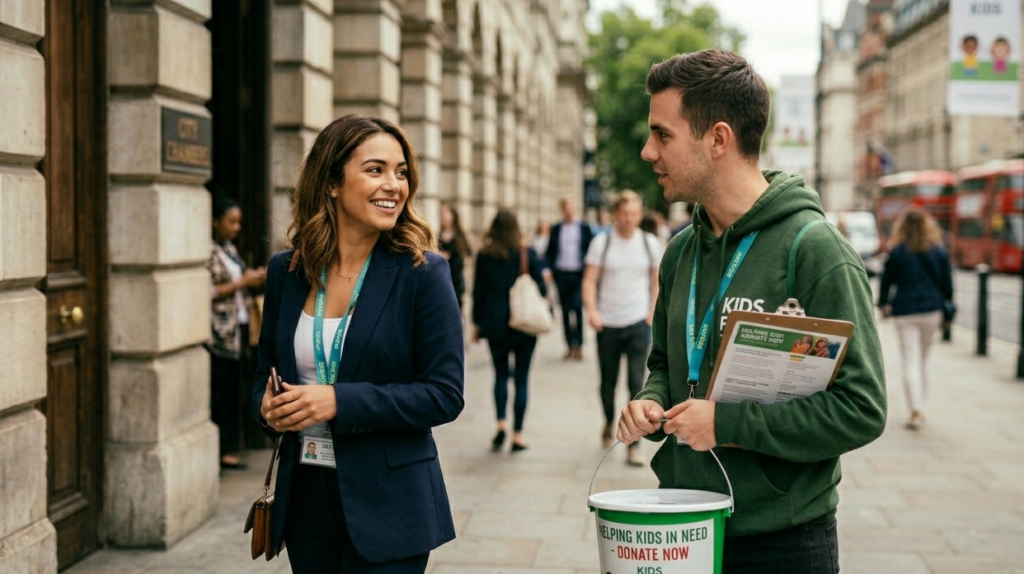
Mark: Hi! Could I have a moment of your time? I’m working for an NGO that helps children get access to education and food.
Jenny: Oh, hi. I’m actually in a bit of a hurry, but I have five minutes.
Mark: That’s perfect. I’ll be quick! We’re talking to people about our charity to raise awareness of our activities.
Jenny: Okay. What do you do?
Mark: We help provide school materials and meals for underprivileged children in vulnerable communities.
Jenny: That sounds like a good cause.
Mark: Yes, we’ve helped a lot of kids. We’re out fund-raising today, if you’d like to support us.
Jenny: How would I do that?
Mark: You can choose to make a one-time donation, or you can donate monthly or annually. Even a small contribution can make a big difference.
Jenny: I’d prefer to start with a one-time donation.
Mark: Of course! Every bit of help counts. Thanks so much for your support!
NOW LET’S REVIEW THE VOCABULARY!
“Could I have a moment of your time?” is a polite phrase to request someone’s attention for a brief conversation.
An NGO (non-governmental organisation) is an organisation that helps people or social causes without aiming to make a profit.
‘To get access to’ means to be able to use or obtain something.
You say, “I’m in a hurry”, when you don’t have much time.
A charity is an NGO that provides help and raises money for those in need.
‘To raise awareness’ means to increase public knowledge regarding a specific cause.
A person who does not have the same standard of living as the majority is underprivileged.
Fund-raising is collecting money (or ‘funds’) for a charity or cause.
‘To make a difference’ means to have a significant positive effect.
The phrase “Every bit of help counts”, means that even small amounts of help are valuable.
GLOSSARY
meals: comida
polite: educada
to request: solicitar
aiming to: con el objetivo de
to make a profit: obtener beneficio económico
to raise money: recaudar dinero
in need: necesitados
regarding: en referencia a
standard: nivel de vida
to collect: recaudar
Play and learn 3
Track 16
Curso de Inglés para Compradores de Acero y Productos Siderúrgicos
Módulo 1: Introducción y Presentación Profesional
Objetivo
Presentarse con proveedores internacionales y explicar las necesidades de la empresa.
Vocabulary
| English | Spanish |
|---|---|
| Steel | Acero |
| Steel Beam | Viga de Acero |
| Structural Steel | Acero Estructural |
| Steel Plate | Placa de Acero |
| Steel Sheet | Lámina de Acero |
| Steel Pipe | Tubería de Acero |
| Steel Bar | Barra de Acero |
| Supplier | Proveedor |
| Manufacturer | Fabricante |
| Mill | Acería |
| Steel Plant | Planta Siderúrgica |
Example
Buyer:
Good morning. My name is Carlos. I work in the Purchasing Department of ABC Steel Solutions.
Supplier:
Nice to meet you.
Buyer:
We purchase structural steel products for construction projects in Mexico.
Módulo 2: Tipos de Productos de Acero
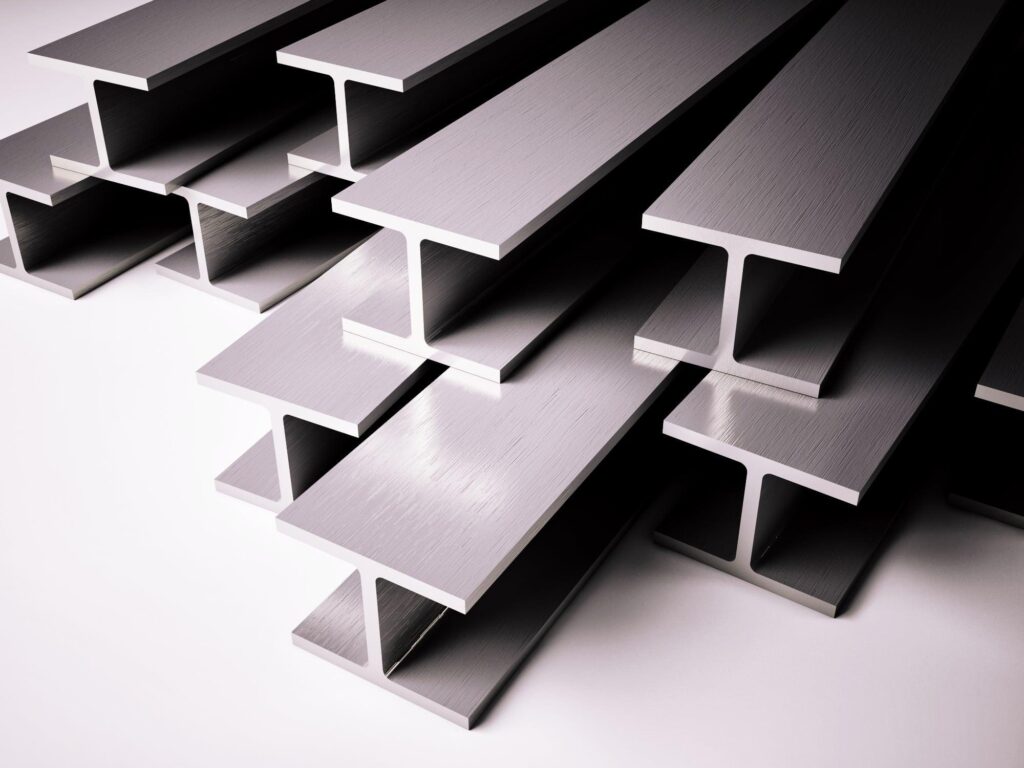
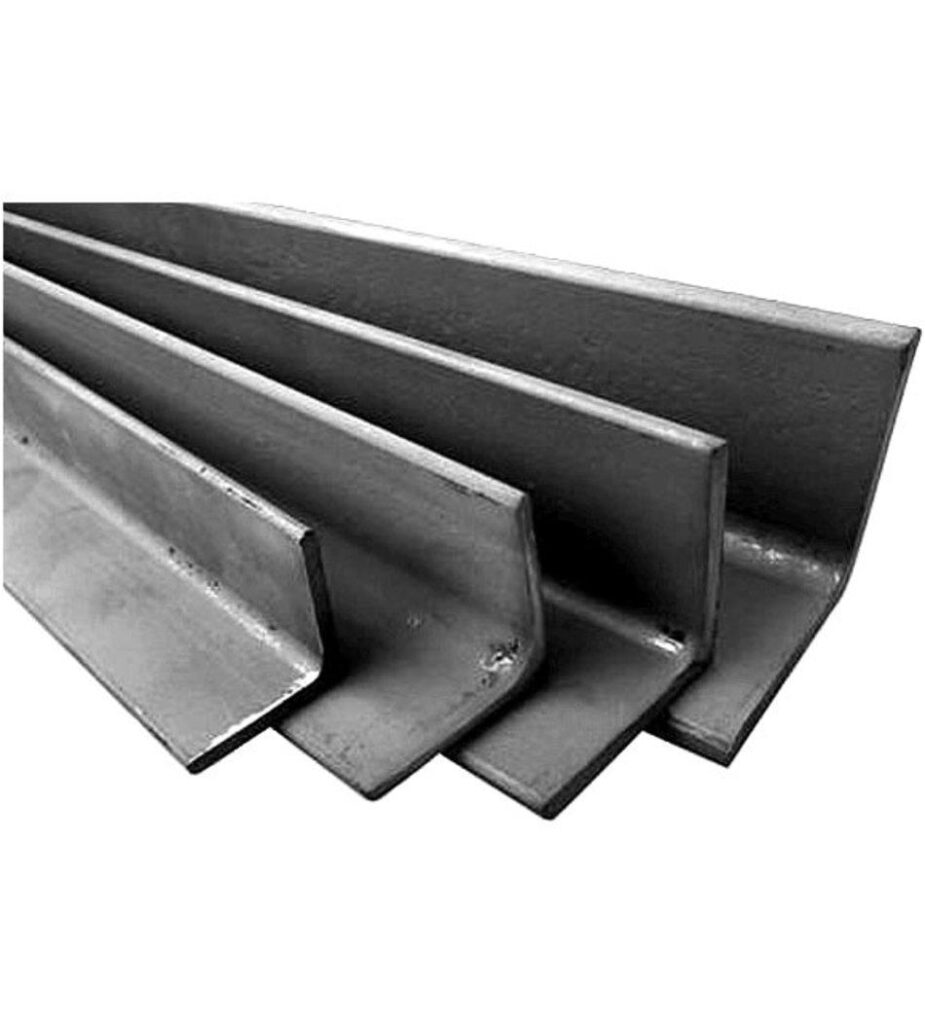
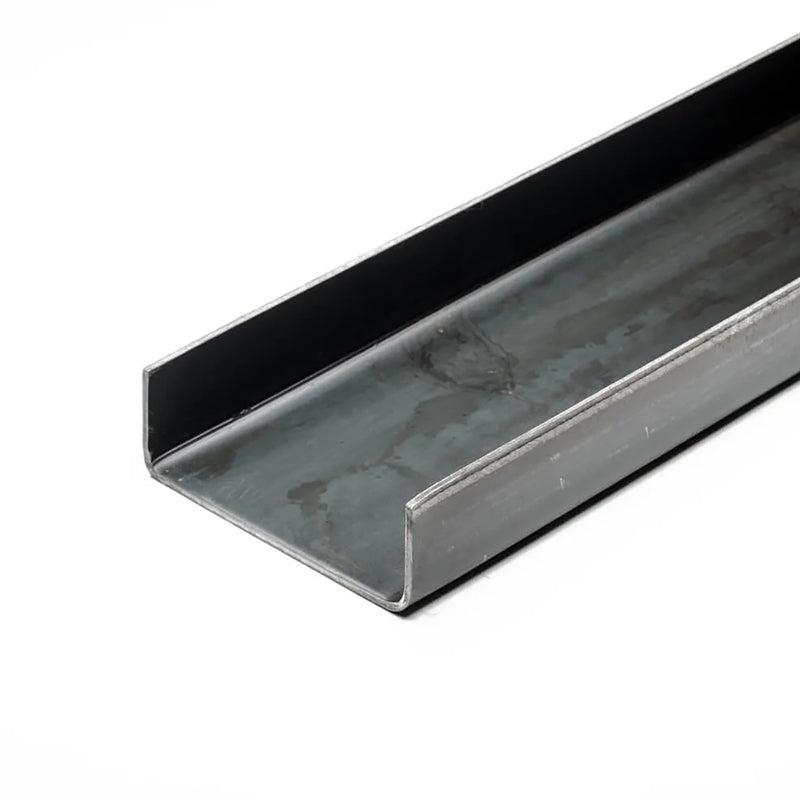
Structural Shapes


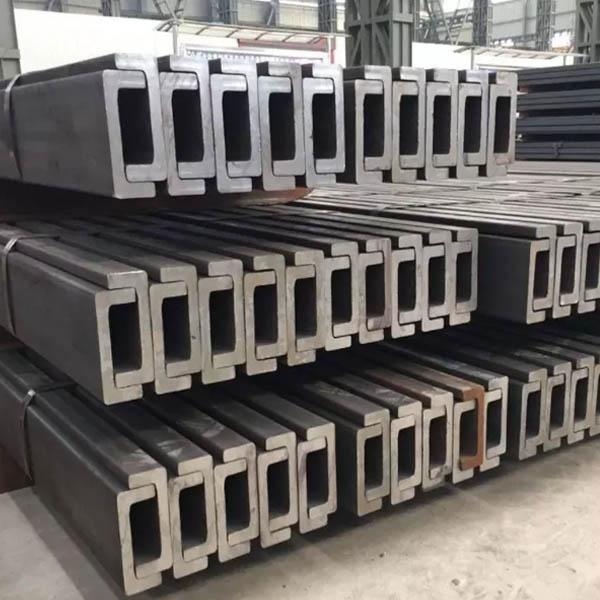
Vocabulary
| English | Spanish |
|---|---|
| I-Beam | Viga I |
| H-Beam | Viga H |
| Wide Flange Beam | Viga de Patín Ancho |
| Channel | Canal |
| Angle | Ángulo |
| Hollow Structural Section (HSS) | Perfil Tubular Estructural |
| Square Tube | Tubo Cuadrado |
| Rectangular Tube | Tubo Rectangular |
| Round Tube | Tubo Redondo |
Questions
- Do you manufacture wide flange beams?
- What sizes are available?
- What grades do you offer?
Módulo 3: Especificaciones Técnicas
Vocabulary
| English | Spanish |
|---|---|
| Grade | Grado |
| Thickness | Espesor |
| Width | Ancho |
| Length | Longitud |
| Weight | Peso |
| Yield Strength | Límite de Fluencia |
| Tensile Strength | Resistencia a la Tracción |
| ASTM Standard | Norma ASTM |
| EN Standard | Norma Europea |
| Mill Test Certificate | Certificado de Calidad |
Preguntas Frecuentes
- What steel grade is this product?
- Does it comply with ASTM standards?
- Can you provide a mill test certificate?
- What is the yield strength?
Módulo 4: Solicitar Cotizaciones
Frases Clave
- We would like to request a quotation.
- Please quote the following material.
- We need pricing for a new project.
- Could you include freight costs?
- Please indicate lead times.
Ejemplo
We are requesting a quotation for:
- ASTM A36 Steel Beams
- Size: W12x26
- Length: 12 meters
- Quantity: 100 tons
Please include:
- Unit price
- Delivery time
- Freight charges
- Payment terms
Módulo 5: Videoconferencias con Proveedores
Expresiones Útiles
- Can you confirm material availability?
- What is your current production capacity?
- What are your lead times?
- Do you have stock available?
- Can you guarantee delivery by July?
Situación Real
Buyer:
We have a project starting next month and need 500 tons of structural steel.
Supplier:
We currently have 300 tons in stock.
Buyer:
How soon can you manufacture the remaining quantity?
Módulo 6: Logística Internacional
Shipping and Logistics

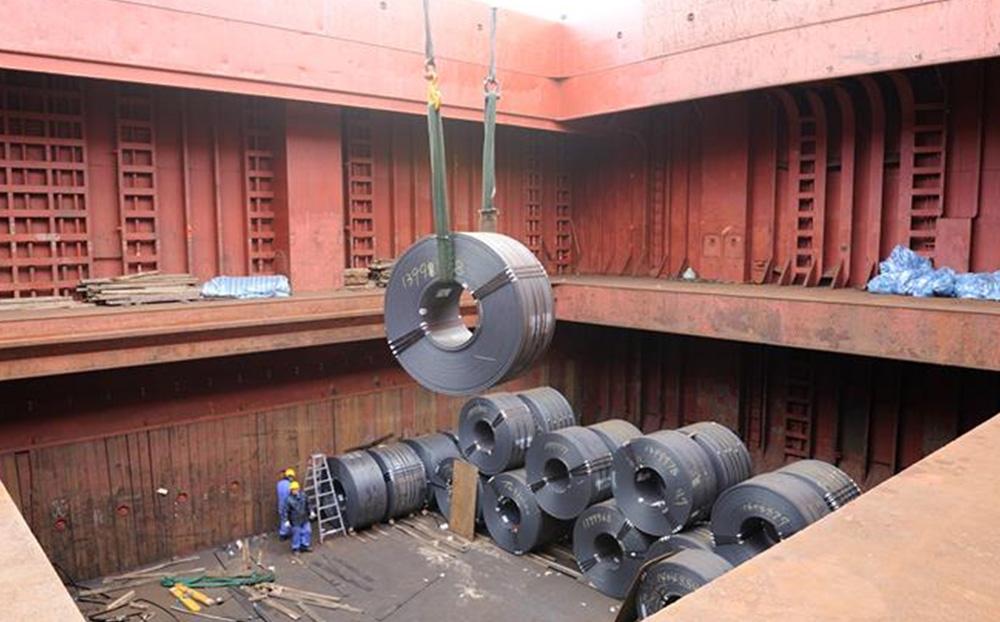

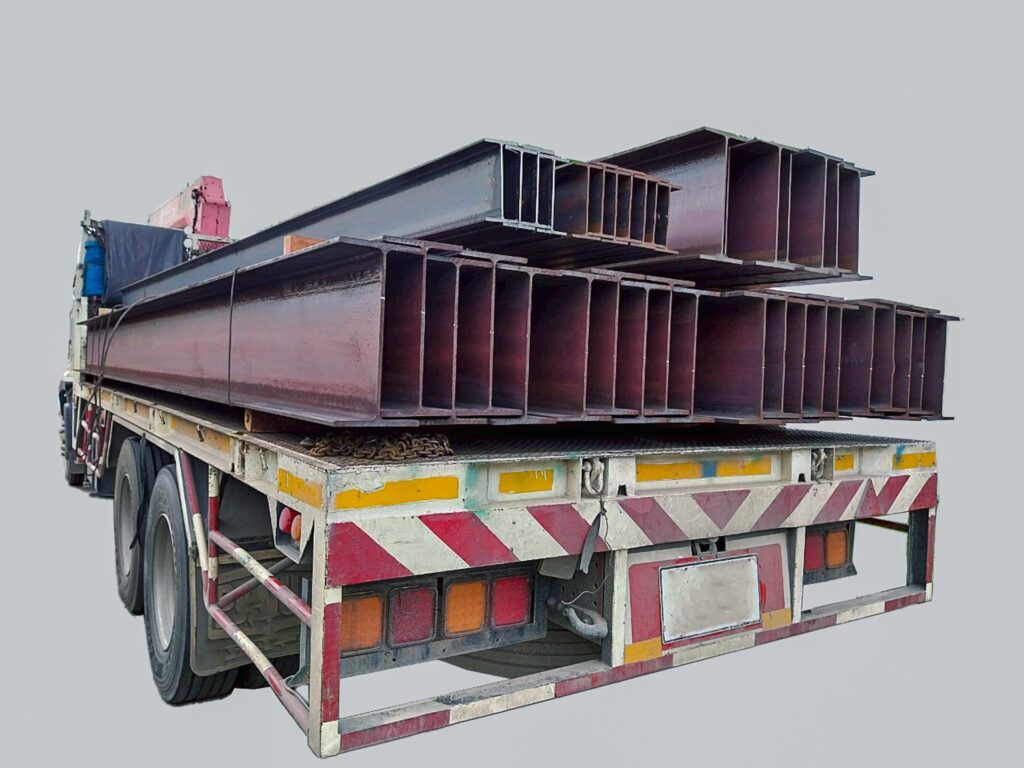
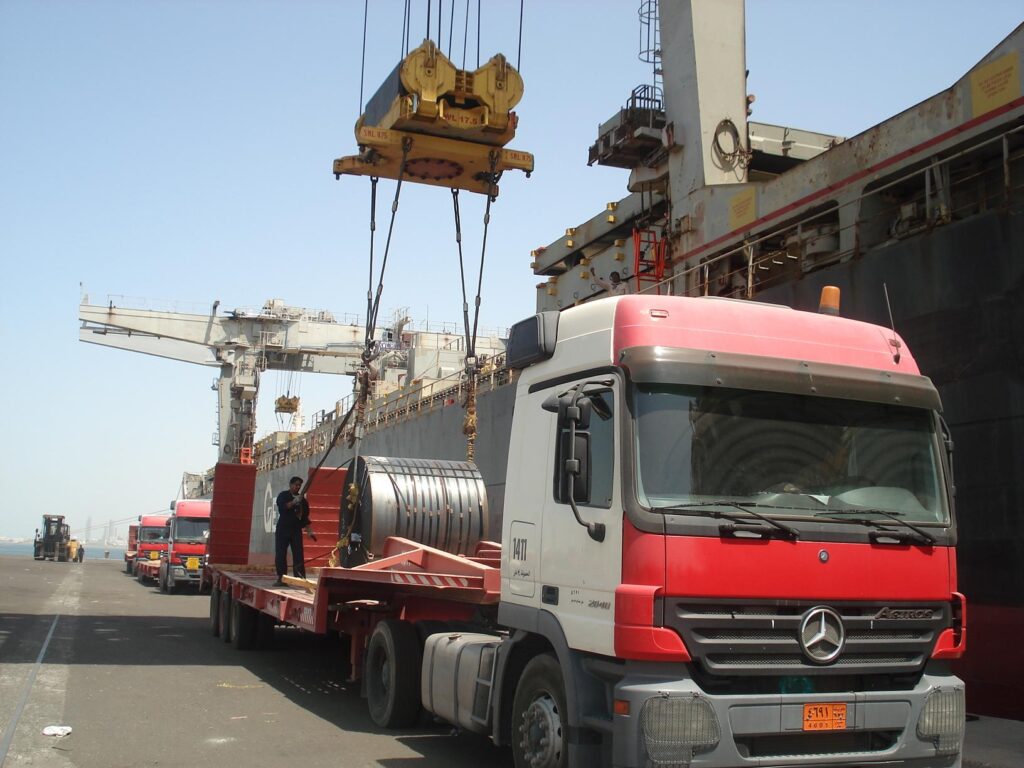
Vocabulary
| English | Spanish |
|---|---|
| Shipment | Embarque |
| Freight | Flete |
| Container | Contenedor |
| Vessel | Buque |
| Customs Clearance | Despacho Aduanal |
| Port of Loading | Puerto de Embarque |
| Port of Destination | Puerto de Destino |
| Delivery Schedule | Programa de Entrega |
Questions
- When will the shipment depart?
- Has the vessel been booked?
- Can you provide the shipping documents?
- What is the estimated arrival date?
Módulo 7: Negociación Comercial
Expresiones
- Your price is higher than expected.
- We received a more competitive offer.
- Can you improve your pricing?
- Could you offer a volume discount?
- We are considering a long-term partnership.
Ejemplo
Buyer:
Your quotation is 8% higher than our target.
Supplier:
What volume are you planning to purchase?
Buyer:
Approximately 1,500 tons annually.
Módulo 8: Problemas de Calidad
Vocabulary
| English | Spanish |
|---|---|
| Defect | Defecto |
| Rust | Óxido |
| Surface Damage | Daño Superficial |
| Non-Conformance | No Conformidad |
| Inspection | Inspección |
| Quality Report | Reporte de Calidad |
Frases
- We identified a quality issue.
- Several beams arrived damaged.
- The material does not meet specifications.
- We require corrective action.
Módulo 9: Correos Electrónicos Profesionales
Solicitar Cotización
Subject: Request for Quotation – Structural Steel Beams
Dear Mr. Smith,
We are interested in purchasing structural steel beams for an upcoming construction project.
Please provide pricing and availability for the attached material list.
We would appreciate receiving information regarding:
- Lead times
- Payment terms
- Freight costs
- Mill certificates
We look forward to your quotation.
Best regards,
Carlos Martinez
Purchasing Department
Módulo 10: Vocabulario Especializado para Aceros
| English | Spanish |
|---|---|
| Carbon Steel | Acero al Carbono |
| Galvanized Steel | Acero Galvanizado |
| Stainless Steel | Acero Inoxidable |
| Hot Rolled Steel | Acero Laminado en Caliente |
| Cold Rolled Steel | Acero Laminado en Frío |
| Structural Beam | Viga Estructural |
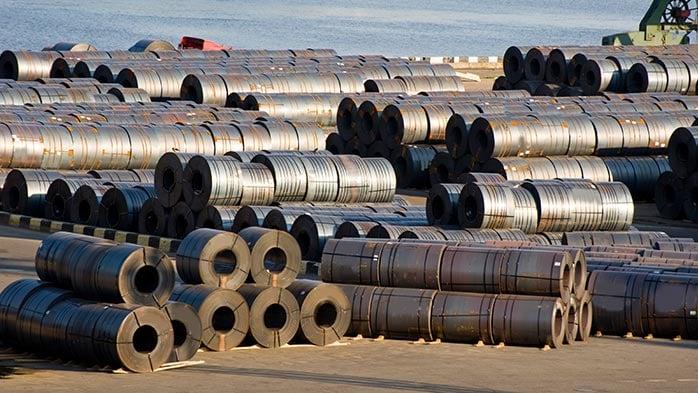
| Steel Coil | Bobina de Acero |
| Steel Fabrication | Fabricación de Acero |
| Welding | Soldadura |
| Corrosion Resistance | Resistencia a la Corrosión |
| Load Bearing Capacity | Capacidad de Carga |
| Structural Integrity | Integridad Estructural |
Purchasing/Procurement
Módulo 1: Professional Introductions and Small Talk
Objetivo
Presentarse profesionalmente y establecer una conversación cordial antes de hablar de negocios.
Vocabulary
| English | Spanish |
|---|---|
| Purchasing Department | Departamento de Compras |
| Buyer | Comprador |
| Supplier | Proveedor |
| Vendor | Proveedor |
| Purchasing Manager | Gerente de Compras |
| Procurement Specialist | Especialista en Compras |
| Sales Representative | Representante de Ventas |
| Product Line | Línea de Productos |
| Manufacturing Plant | Planta de Producción |
| Business Partner | Socio Comercial |
Useful Expressions
Introducing Yourself
- Hello, this is Carlos from ABC Manufacturing.
- Good morning. My name is Carlos and I work in the Purchasing Department.
- I am responsible for sourcing materials for our production lines.
- I handle purchasing operations for our company.
Asking About the Other Person
- Could you please introduce yourself?
- What products does your company specialize in?
- How long have you been working with your company?
Dialogue
Buyer:
Good morning. This is Carlos from ABC Manufacturing.
Sales Rep:
Good morning, Carlos. This is John Smith from Global Components.
Buyer:
Nice to meet you, John. I am responsible for purchasing electronic components for our production lines.
Sales Rep:
Great. We specialize in supplying electronic components worldwide.
Módulo 2: Telephone Skills
Objective
Realizar llamadas de negocios con confianza.
Key Expressions
Starting a Call
- Good morning. This is Carlos from ABC Manufacturing.
- Am I speaking with Mr. Johnson?
- Is this a good time to talk?
Asking for Someone
- Could I speak with the sales manager, please?
- May I talk to the person responsible for international sales?
Clarifying Information
- Could you repeat that, please?
- Could you speak a little slower?
- I didn’t catch that.
- Let me confirm that information.
Ending a Call
- Thank you for your time.
- I appreciate your assistance.
- I’ll send a follow-up email.
- Have a great day.
Módulo 3: Requesting Quotations (RFQ)
Vocabulary
| English | Spanish |
|---|---|
| Quotation | Cotización |
| Price List | Lista de precios |
| Unit Price | Precio Unitario |
| Lead Time | Tiempo de Entrega |
| MOQ (Minimum Order Quantity) | Cantidad Mínima de Compra |
| Availability | Disponibilidad |
| Delivery Date | Fecha de Entrega |
| Freight Cost | Costo de Flete |
| Payment Terms | Condiciones de Pago |
Useful Questions
- Could you provide a quotation?
- What is your current lead time?
- What is the minimum order quantity?
- Is the product currently available?
- What payment terms do you offer?
Sample Email
Subject: Request for Quotation
Dear Mr. Smith,
We are interested in purchasing your products and would appreciate receiving a quotation for the following items.
Please include:
- Unit prices
- Lead times
- Minimum order quantities
- Payment terms
Thank you for your support.
Best regards,
Carlos Martinez
Purchasing Department
Módulo 4: Video Conferences
Starting a Meeting
- Thank you for joining today’s meeting.
- Can everyone hear me clearly?
- Let’s get started.
During the Meeting
- Could you share your screen?
- Let me explain our requirements.
- I’d like to discuss pricing and lead times.
- Could you elaborate on that point?
Agreeing
- I completely agree.
- That sounds reasonable.
- We can work with that.
Disagreeing Politely
- I’m afraid we may need to reconsider that.
- That may be difficult for us.
- Could we explore another option?
Closing
- Thank you for your time.
- We’ll review the information internally.
- We look forward to working with you.
Módulo 5: Negotiating Prices
Useful Expressions
- Is there any room for improvement on pricing?
- Could you offer a discount for larger volumes?
- We are looking for a more competitive price.
- Your offer is interesting, but it is above our budget.
- Could you review your quotation?
Negotiation Dialogue
Buyer:
Your quotation looks good, but the price is slightly above our target.
Supplier:
What target price are you looking for?
Buyer:
We were expecting something closer to $8.50 per unit.
Supplier:
Let me review that with management.
Módulo 6: Purchase Orders
Vocabulary
| English | Spanish |
|---|---|
| Purchase Order (PO) | Orden de Compra |
| Quantity | Cantidad |
| Shipment | Embarque |
| Delivery | Entrega |
| Invoice | Factura |
| Packing List | Lista de Empaque |
| Tracking Number | Número de Rastreo |
Useful Expressions
- We have issued the purchase order.
- Please confirm receipt of the PO.
- When do you expect shipment?
- Could you provide the tracking number?
Módulo 7: Managing Problems
Delays
- We have not received the shipment.
- The order is delayed.
- Could you provide an update?
Quality Issues
- We detected a quality issue.
- Several units arrived damaged.
- We need corrective actions.
Urgent Situations
- This matter is urgent.
- We need an immediate response.
- Could you prioritize this request?
Módulo 8: Professional Emails
Email Structure
Opening
- I hope you are doing well.
- Thank you for your email.
Main Message
- We would like to request…
- We would appreciate your support…
- Please find attached…
Closing
- Thank you for your assistance.
- We look forward to your response.
- Best regards.
Módulo 9: Advanced Procurement Vocabulary
| English | Spanish |
|---|---|
| Supply Chain | Cadena de Suministro |
| Raw Materials | Materias Primas |
| Inventory | Inventario |
| Forecast | Pronóstico |
| Cost Reduction | Reducción de Costos |
| Strategic Sourcing | Abastecimiento Estratégico |
| Vendor Evaluation | Evaluación de Proveedores |
| Contract Negotiation | Negociación de Contratos |
| Annual Spend | Gasto Anual |
| Procurement Strategy | Estrategia de Compras |
Proyecto Final
Simulación completa de una videoconferencia con un proveedor alemán:
- Presentación profesional.
- Solicitud de cotización.
- Preguntas técnicas.
- Negociación de precios.
- Discusión de tiempos de entrega.
- Acuerdo comercial.
- Correo de seguimiento.
Módulo 1: Greetings and Farewells
Objetivo
Al finalizar esta lección, el alumno podrá:
- Saludar a clientes de forma profesional.
- Presentarse.
- Ofrecer ayuda.
- Despedirse de manera cortés.
- Utilizar expresiones comunes en ventas y servicio al cliente.
1. Greetings (Saludos)
Formal Greetings
| English | Spanish |
|---|---|
| Good morning. | Buenos días. |
| Good afternoon. | Buenas tardes. |
| Good evening. | Buenas noches (al llegar). |
| Welcome! | ¡Bienvenido(a)! |
| Hello. | Hola. |
| How are you today? | ¿Cómo está hoy? |
| It’s nice to see you. | Es un gusto verlo(a). |
Examples
Salesperson: Good morning! Welcome to our store.
Customer: Good morning.
Salesperson: How are you today?
Customer: I’m fine, thank you.
Traducción
Vendedor: ¡Buenos días! Bienvenido a nuestra tienda.
Cliente: Buenos días.
Vendedor: ¿Cómo está hoy?
Cliente: Estoy bien, gracias.
2. Introducing Yourself (Presentarse)
Useful Expressions
| English | Spanish |
|---|---|
| My name is… | Mi nombre es… |
| I’m… | Soy… |
| I’ll be happy to help you. | Estaré encantado de ayudarle. |
| I’m one of the sales representatives. | Soy uno de los representantes de ventas. |
| How can I help you today? | ¿Cómo puedo ayudarle hoy? |
Example
Salesperson: Hello, my name is Daniel. I’ll be happy to help you today.
Customer: Thank you.
Salesperson: How can I help you today?
3. Offering Help (Ofrecer ayuda)
Common Sales Expressions
| English | Spanish |
|---|---|
| How can I help you? | ¿Cómo puedo ayudarle? |
| Can I help you find something? | ¿Puedo ayudarle a encontrar algo? |
| Are you looking for anything in particular? | ¿Busca algo en particular? |
| Please let me know if you need any help. | Por favor, avíseme si necesita ayuda. |
| I’d be happy to assist you. | Estaré encantado de ayudarle. |
Example
Salesperson: Are you looking for anything in particular?
Customer: Yes, I’m looking for a laptop.
Salesperson: I’d be happy to help you.
4. Polite Expressions (Expresiones Corteses)
| English | Spanish |
|---|---|
| Please | Por favor |
| Thank you | Gracias |
| You’re welcome | De nada |
| Excuse me | Disculpe |
| Certainly | Claro que sí |
| Of course | Por supuesto |
| No problem | No hay problema |
Examples
- Thank you for your visit.
- You’re welcome.
- Please follow me.
- Certainly, sir.
- Of course, ma’am.
5. Farewells (Despedidas)
Common Farewells
| English | Spanish |
|---|---|
| Goodbye. | Adiós. |
| Have a nice day. | Que tenga un buen día. |
| Have a great day. | Que tenga un excelente día. |
| Thank you for coming. | Gracias por venir. |
| Thank you for your business. | Gracias por su compra. |
| We hope to see you again soon. | Esperamos verlo pronto nuevamente. |
| See you next time. | Hasta la próxima. |
Example
Salesperson: Thank you for your purchase.
Customer: Thank you.
Salesperson: Have a great day!
Customer: You too!
6. Vocabulary
| English | Spanish |
|---|---|
| Customer | Cliente |
| Salesperson | Vendedor |
| Store | Tienda |
| Product | Producto |
| Service | Servicio |
| Purchase | Compra |
| Help | Ayuda |
| Price | Precio |
| Order | Pedido |
| Business | Negocio |
7. Dialogue Practice
At a Store
Salesperson: Good afternoon! Welcome to our store.
Customer: Hello.
Salesperson: My name is Alex. How can I help you today?
Customer: I’m looking for a new phone.
Salesperson: Certainly. Please follow me.
Customer: Thank you.
Salesperson: You’re welcome.
(After the purchase)
Salesperson: Thank you for your purchase.
Customer: Thank you.
Salesperson: Have a great day!
Customer: Goodbye.
8. Speaking Practice
Responde en inglés:
- ¿Cómo saludarías a un cliente por la mañana?
- ¿Cómo te presentarías?
- ¿Cómo ofrecerías ayuda?
- ¿Cómo agradecerías una compra?
- ¿Cómo despedirías a un cliente?
Respuestas sugeridas
- Good morning! Welcome.
- My name is ____.
- How can I help you today?
- Thank you for your purchase.
- Have a great day!
Reported speech

Do you know how to report what somebody else said? Test what you know with interactive exercises and read the explanation to help you.
Look at these examples to see how we can tell someone what another person said.
direct speech: ‘I love the Toy Story films,’ she said.
indirect speech: She said she loved the Toy Story films.
direct speech: ‘I worked as a waiter before becoming a chef,’ he said.
indirect speech: He said he’d worked as a waiter before becoming a chef.
direct speech: ‘I’ll phone you tomorrow,’ he said.
indirect speech: He said he’d phone me the next day.
Try this exercise to test your grammar.
see moreRead the explanation to learn more.
Grammar explanation
Reported speech is when we tell someone what another person said. To do this, we can use direct speech or indirect speech.
direct speech: ‘I work in a bank,’ said Daniel.
indirect speech: Daniel said that he worked in a bank.
In indirect speech, we often use a tense which is ‘further back’ in the past (e.g. worked) than the tense originally used (e.g. work). This is called ‘backshift’. We also may need to change other words that were used, for example pronouns.
Present simple, present continuous and present perfect
When we backshift, present simple changes to past simple, present continuous changes to past continuous and present perfect changes to past perfect.
‘I travel a lot in my job.’
- Jamila said that she travelled a lot in her job.
‘The baby’s sleeping!’
- He told me the baby was sleeping.
‘I’ve hurt my leg.’
- She said she’d hurt her leg.
Past simple and past continuous
When we backshift, past simple usually changes to past perfect simple, and past continuous usually changes to past perfect continuous.
‘We lived in China for five years.’
- She told me they’d lived in China for five years.
‘It was raining all day.’
- He told me it had been raining all day.
Past perfect
The past perfect doesn’t change.
‘I’d tried everything without success, but this new medicine is great.’
- He said he’d tried everything without success, but the new medicine was great.
No backshift
If what the speaker has said is still true or relevant, it’s not always necessary to change the tense. This might happen when the speaker has used a present tense.
‘I go to the gym next to your house.’
- Jenny told me that she goes to the gym next to my house. I’m thinking about going with her.
‘I’m working in Italy for the next six months.’
- He told me he’s working in Italy for the next six months. Maybe I should visit him!
‘I’ve broken my arm!’
- She said she’s broken her arm, so she won’t be at work this week.
Pronouns, demonstratives and adverbs of time and place
Pronouns also usually change in indirect speech.
‘I enjoy working in my garden,’ said Bob.
- Bob said that he enjoyed working in his garden.
‘We played tennis for our school,’ said Alina.
- Alina told me they’d played tennis for their school.
However, if you are the person or one of the people who spoke, then the pronouns don’t change.
‘I’m working on my thesis,’ I said.
- I told her that I was working on my thesis.
‘We want our jobs back!’ we said.
- We said that we wanted our jobs back.
We also change demonstratives and adverbs of time and place if they are no longer accurate.
‘This is my house.’
- He said this was his house. [You are currently in front of the house.]
- He said that was his house. [You are not currently in front of the house.]
‘We like it here.’
- She told me they like it here. [You are currently in the place they like.]
- She told me they like it there. [You are not in the place they like.]
‘I’m planning to do it today.’
- She told me she’s planning to do it today. [It is currently still the same day.]
- She told me she was planning to do it that day. [It is not the same day any more.]
In the same way, these changes to those, now changes to then, yesterday changes to the day before, tomorrow changes to the next/following day and ago changes to before.
Do this exercise to test your grammar again.
see moreBritish English vs. American English: Car And Road Vocabulary
‘Gas’ o ‘petrol’, ‘motorways’ o ‘freeways’. Si va a conducir por Gran Bretaña y EE. UU. necesita saber que estos países usan palabras distintas para designar lo mismo.

British cars use petrol, whereas American cars use gas, which is short for gasoline. So if you need to fill up your car, you must ask for a petrol station in the UK and a gas or filling station in the US. There are service stations in both countries. Service stations are usually found on multiple-lane roads called motorways in Britain and highways or freeways in the US. (Highway is generic, while freeways are literally free of charge). There is a lot of confusion with roads: in the US a pavement is the surface of the road and pedestrians use the sidewalk, while the British call the sidewalk the pavement.
IN THE HOOD
Let’s look at a car. Where do you put your luggage? In a British family car you put it in the boot, in the USA that’s a trunk. At the front of the car the engine is covered by a bonnet (UK) or a hood (US): here both are originally types of hat. The front window of a car is called a windscreen in the UK and a windshield in the US: screens and shields both offer protection. Before a car turns into another road, or changes lane, small lights flash on the side of the car. These lights are called indicators in the UK, but turn signals or blinkers in the US. Blink literally means to open and close both eyes.
STEP ON IT
The controls inside the car have the same names, except the British change gear with a gear stick and Americans use a gear shift. Shift is a synonym of ‘change.’ Finally, cars have three foot pedals: the clutch, the brake and, while British cars have an accelerator, American cars have a gas pedal.
Glossary
petrol, gas: gasolina
to fill up: llenar el depósito, repostar
multiple-lane roads: carreteras con varios carriles
surface: superfície
sidewalk: acera
boot, trunk: maletero
bonnet, hood: capó
windscreen, windshield: parabrisas
screens: pantallas
shields: escudos
gear: marcha
clutch: embrague
brake: freno
Useful Classroom Expressions in English
(How to give opinions, ask questions, and participate with confidence)
Learning English is not just about understanding…
it’s about participating, asking questions, and expressing yourself.
Many students know the answer, but they don’t know how to say it in class.
Here are some essential expressions you can start using today

Giving your opinion
Use these when you want to share your ideas:
- I think that…
→ Yo pienso que… - In my opinion…
→ En mi opinión… - I believe…
→ Yo creo que… - From my point of view…
→ Desde mi punto de vista… - I agree / I disagree
→ Estoy de acuerdo / No estoy de acuerdo
Asking for information or clarification
Don’t stay quiet if you don’t understand:
- Can you explain that again?
→ ¿Puedes explicar eso otra vez? - What do you mean?
→ ¿Qué quieres decir? - Could you give an example?
→ ¿Podrías dar un ejemplo? - What does this mean?
→ ¿Qué significa esto? - How do you say ___ in English?
→ ¿Cómo se dice ___ en inglés?
Asking someone to repeat
Very useful in live classes:
- Can you repeat that, please?
→ ¿Puedes repetir eso, por favor? - Sorry, I didn’t understand.
→ Perdón, no entendí. - Could you speak more slowly?
→ ¿Puedes hablar más despacio? - Can you say that one more time?
→ ¿Puedes decir eso otra vez?
Participating or interrupting politely
- Can I say something?
→ ¿Puedo decir algo? - I have a question.
→ Tengo una pregunta. - Excuse me…
→ Disculpa… - Can I add something?
→ ¿Puedo agregar algo?
Important tip
You don’t need to speak perfectly to participate.
The goal is to communicate and build confidence.
Every time you use these expressions:
✔️ you improve your fluency
✔️ you gain confidence
✔️ you learn faster
Alternatives to “I’m fine” in English
When someone asks “How are you?”, many learners automatically answer “I’m fine.” While correct, it can sound repetitive or unnatural. Native speakers often use a variety of expressions depending on their mood, the situation, or the level of formality.
Here are some useful alternatives, with translations into Spanish:

Positive and Natural Responses
- Pretty good, thanks. → Bastante bien, gracias.
- I’m doing well. → Estoy bien / Me va bien.
- I’m great, thanks for asking. → Estoy muy bien, gracias por preguntar.
- Things are going really well. → Las cosas van muy bien.
Neutral or Casual Responses
- Not too bad. → No tan mal / Bastante bien.
- I’m doing alright. → Estoy bien / Todo en orden.
- I’m okay. → Estoy bien.
- Same as always. → Como siempre.
More Colloquial Responses
- Can’t complain. → No me puedo quejar.
- I’m hanging in there. → Aquí voy / Estoy aguantando.
- I’m getting by. → Me las arreglo / Voy saliendo adelante.
Enthusiastic Responses
- Fantastic! → ¡Fantástico!
- Couldn’t be better. → No podría estar mejor.
- I’m wonderful. → Estoy de maravilla.
Practical Tip
After answering, it’s polite and natural to return the question:
- How about you? → ¿Y tú?
- What about you? → ¿Y tú qué tal?
This keeps the conversation flowing and makes you sound more like a native speaker.
Different Ways to Say Hello in English
Greeting people in English is more than just saying “Hello.” Native speakers use a variety of expressions depending on the situation—formal, informal, or casual. Here’s a practical guide with examples you can use every day.

Basic Greetings
- Hello!
- Hi!
- Good morning.
- Good afternoon.
- Good evening.
Informal and Everyday Greetings
- Hey!
- What’s up?
- How’s it going?
- How are you doing?
- Yo!
Formal Greetings
- How do you do?
- It’s nice to meet you.
- Pleased to meet you.
- Good to see you.
- How have you been?
Special Occasion Greetings
- Happy birthday!
- Congratulations!
- Happy holidays!
- Welcome!
Practical Tip
After greeting someone, it’s common to add a short follow-up question to keep the conversation flowing:
- How about you?
- What about you?
This makes your interaction sound more natural and polite.
Comentarios recientes