
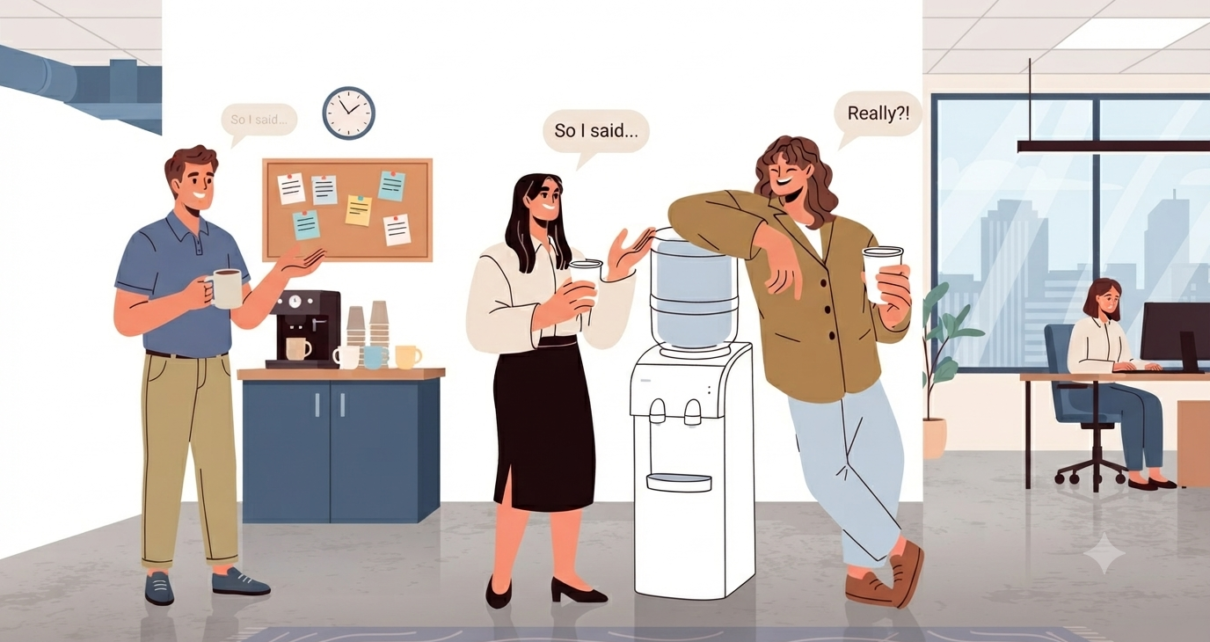
Desdeñamos las conversaciones triviales, pero son la mejor manera de romper el hielo y, a partir de ellas, adentrarse en temas más profundos e interesantes.
People love to complain about small talk. Some say it’s “painful”, “dishonest” and “a chore.” Some of my own friends have called it “boring” and “exhausting.” A 2016 Wired magazine article titled “Small talk should be banned” argued that idle chit-chat “does not build relationships and does not make us happier”, but persists because “we actively seek the lowest common denominator.” Instead, the authors suggest deeper conversation topics, such as: “What is your relationship with God?” or “What is something you fear in life?”
I’m here to say, respectfully: all of this is wrong.
First, I find the anti-small talk position arrogant, marked by a sense that the holder is more thoughtfully and deeply engaged with life than everyone else. When I was in middle school, I knew a kid who only listened to inaccessible goth rock and dismissed anyone who listened to the Top 40 as shallow and stupid. That’s how small talk haters sound to me: “You want to talk about the weather? Uh, ever heard of mortality?!”
Sure, small talk sucks sometimes. I once got trapped talking to someone for thirty minutes about pencil lead. But you can’t always expect everyone to meet you in the mucky depths of human existence. Maybe the person you’re talking to had a long day and still has to go home and make dinner and put their kids to sleep. You’re going to demand they reflect on what happens after we die? Everyone’s just trying to get through the day.
“I find small talk incredibly useful,” says Lizzie Post, co-president of the Emily Post Institute, which provides etiquette advice and training. She describes small talk as a “safety zone” for people to be in together. Religion, sex and politics are all excellent conversation topics, she says, but they may not feel accessible or comfortable to everyone all the time. Chatting about last night’s football game, the food at an event or someone’s hobbies is a much easier way to build initial rapport. Then, if the other person seems open, you can dip your toe into deeper topics.
A couple of years ago, for example, a man in his late sixties sat next to me on a plane and we started chatting. We said hello and exchanged niceties about the weather (hot) and why we were travelling (to see family.) We talked about work and recent vacations, and by the end of the two-hour flight, I knew all about his various career pivots, and how psilocybin had transformed his life and saved his marriage. Interesting! But we only got there because we started with small talk. Had I opened with, “What is your experience with psychedelics and how have they affected your relationships?” that might have been off-putting.

Lista de vocabulario inglés B1 para aprobar un examen oficial
Post suspects some people don’t like small talk because it doesn’t always allow them to be the star of the show — if you ask someone about their hobbies, then you have to listen to what they say. This can be challenging for those who prefer to be the talker. “Some people want to be seen in a certain way, and don’t feel like small talk gets them to be seen in that interesting way,” she says.
And if you think small talk is boring, that may be a skill issue. It requires a real back-and-forth, even if it doesn’t plumb the depths of someone’s soul. Listening attentively can significantly improve the quality of your chit-chat, Post says. “Have your radar up,” she explains. “Pay attention to whether the other person seems interested, and if they’ve contributed anything to the conversation. If you’ve been talking for a long time and the other person hasn’t said anything on the topic, they’re probably bored. Maybe their eyes have glazed over a little bit,” Post says. “I would take it as a sign to change the topic, and ask them something about themselves.” She suggests a question like: “What’s keeping you interested these days?”
Yes, small talk can be shallow. But consider this: sitting in a kiddie pool and sunning yourself while sipping a soda is far more relaxing than shivering in the open ocean. Shallow can be delightful. So go forth, and gab about public transit and a new restaurant you heard was pretty good. But if someone brings up pencil lead, just pretend you have to take a phone call.
Published in The Guardian on 21 November 2025.
GLOSSARY
to complain: quejarse
small talk: hablar de cosas sin importancia
chore: lata, obligación
to ban: prohibir
idle: inútil, vacío
chit-chat: cháchara
holder: el que la sostiene
thoughtfully: conscientemente, reflexivamente
engaged: involucrarse, participar
middle school: educación secundaria
to dismiss: desestimar
shallow: superficial
pencil lead: mina de lápiz
mucky: mugrientas
to get through the day: sobrellevar el día, pasar el día
rapport: entendimiento
to dip a toe in: tantear el terreno
niceties: formalidades
career pivots: cambios profesionales
off-putting: incómodo
back-and-forth: de acá para allá
to plumb: sondear, explorar a fondo
to glaze over: poner los ojos vidriosos
kiddie pool: piscina infantil
to sun oneself: tomar el sol
to sip: sorber
to shiver: tiritar
delightful: placentero
to go forth: avanzar
to gab: charlar