
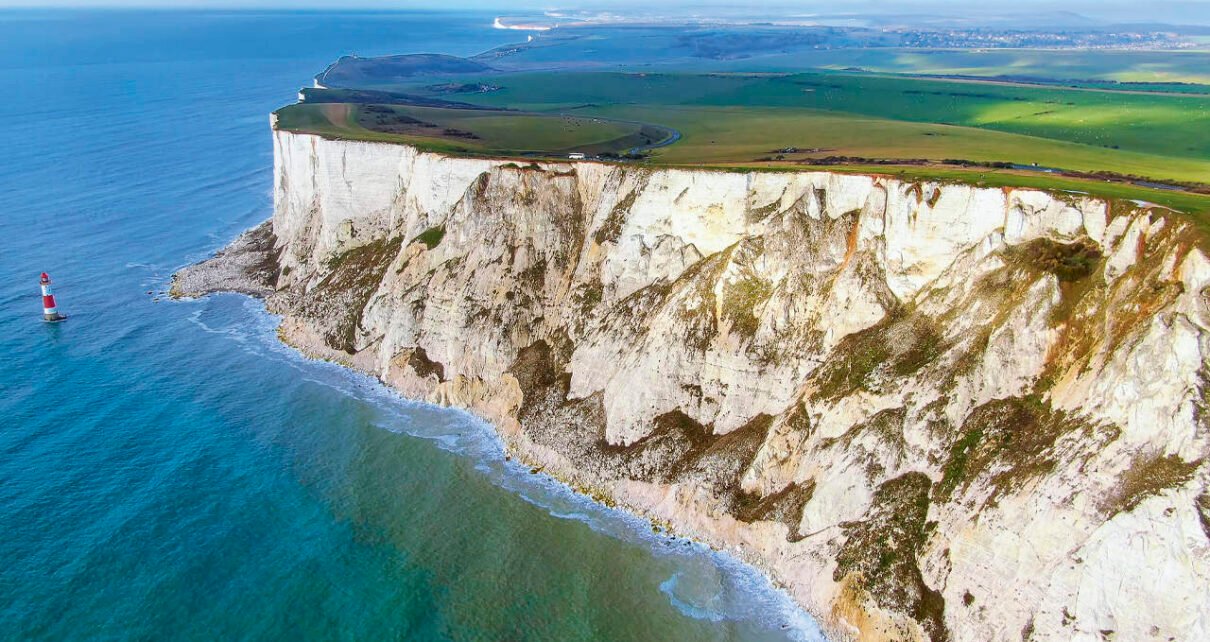
En sus cien millones de años de historia, los acantilados de piedra caliza blanca de Dover han sido escenario de múltiples batallas, mantenido alejados a los enemigos o inspirado a artistas para, en última instancia, convertirse en un símbolo de paz.
In their hundred-million-year history, the white cliffs of Dover have been the scene of multiple battles, invasions and wars. Situated at the closest point between Britain and France, these 110-meter-tall cliffs form a natural barrier of chalk rock, and have stood guard throughout history. The earliest record is from 55 BC, in Julius Caesar’s Commentarii De Bello Gallico (‘Commentaries on the Gallic War’). Caesar arrived at Dover with two legions of soldiers. There, they were besieged by an army hurling javelins from the cliff top. They had to move further up the coast, starting their invasion from Deal in Kent instead.
ROYAL CONNECTIONS
The white cliffs were the site of another historic moment, when King Charles II returned from exile in the Netherlands. He landed on the shore of Dover on May 25, 1660. His triumphant arrival in London four days later marked the start of the English Restoration.
During the Napoleonic War, tunnels were dug into the chalk rocks. Dover was an obvious target, being so close to France. Dover Castle was fortified and the tunnels were built to shelter the troops. Napoleon did not invade, however, and the tunnels were abandoned.
GUARDING BRITAIN
During World War Two, the tunnels were enlarged to form a secret network. The lower levels housed Channel Command during the Battle of Britain, including Winston Churchill’s personal wartime headquarters.
The cliffs were also on Britain’s frontline throughout World War Two. German armies crossing the Channel faced attack from gun emplacements. Anti-aircraft batteries fired on enemy planes. The cliffs were the last sight of troops leaving Britain and the first sight of those returning home. Famously, they greeted British forces returning from Dunkirk.
It is no wonder that despite all the wars and battles they have seen, today, the white cliffs of Dover have become a symbol of home, safety and peace.
GLOSSARY
cliffs: acantilados
closest: más cercanos
chalk: creta, caliza
to stand guard: montar guardia
throughout: a lo largo de
earliest record: primer documento
besieged: asediar
army: ejército
to hurl: lanzar
javelins: jabalinas
to move further: avanzar
instead: en lugar de
to land: atracar, tomar tierra
shore: costa
Restoration: Restauración
to dig: cavar
target: objetivo
to shelter: refugiar
to house: albergar
headquarters: cuartel general
frontline: frente
to face: enfrentar
gun emplacements: puestos de artillería
anti-aircraft: antiaéreo
to fire: disparar
sight: vista
famously: como es bien sabido
to greet: dar la bienvenida
despite: no obstante