The Key to Ancient Egypt: The Rosetta Stone
Se cumplen doscientos años del descubrimiento de la piedra de Rosetta, el fragmento de un monolito con inscripciones en tres lenguas diferentes que permitió descifrar el lenguaje de los jeroglíficos y, gracias a ello, los secretos del antiguo Egipto.
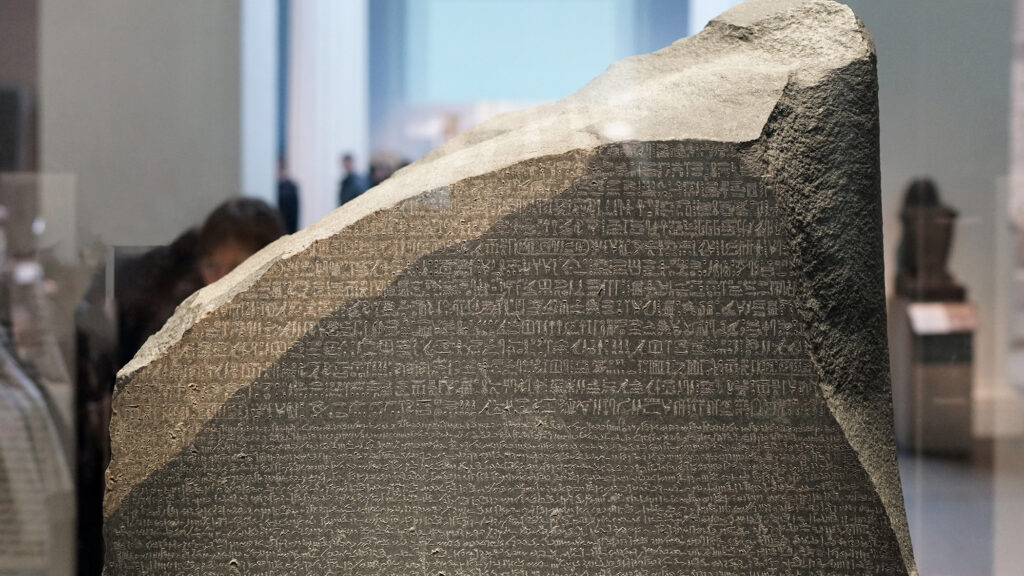
The time of the pharaohs has captured the imagination for centuries. Their temples and pyramids inspire wonder 4,500 years on. These incredible feats of architecture are marked with colourful hieroglyphics, recording the history of ancient Egypt. For a long time, however, they were merely decoration; no-one knew how to read them.
A LOST MESSAGE
Two centuries ago this year, they were finally deciphered, thanks to the Rosetta Stone. The basalt artifact is a broken piece of a larger slab, measuring 114cm by 72cm. On its surface, a message is carved in two languages and three scripts: demotic, hieroglyphics (both Egyptian) and ancient Greek. This combination provided the key to unlock the meaning of the symbols, so the writings of the ancient Egyptians could be understood at last.
THE STONE’S JOURNEY
The Rosetta Stone was found by French soldiers during Napoleon’s invasion of Egypt in 1799. They were building a fort in the town of Rosetta — now Rashid — in the Nile Delta and discovered it buried in an old wall. Pierre-François Bouchard, the officer in charge, realised the importance of the engravings. He correctly guessed that they were translations of the same text. The stone was sent to Cairo, where the inscriptions were copied at the Institute of Egypt. When Napoleon was defeated, the stone was sent to Britain. It was donated to the British Museum by King George III in 1802, where it still resides today.
THREE LANGUAGES
The Rosetta Stone had inscriptions in hieroglyphics, the language of the priests; demotic, the language of the people; and ancient Greek, the language of administration. Hieroglyphics were used until the 4th century AD but, by the 19th century, all knowledge of them had disappeared. However, ancient Greek was largely understood. An English physicist provided the first clue. Thomas Young discovered that the name ‘Ptolemy’ was present in all three inscriptions. He realised that hieroglyphics could describe sounds, as well as concepts. Some signs were symbols, others were alphabetic. French scholar Jean-François Champollion used this key to unlock the language and he succeeded in deciphering hieroglyphics. He announced his discovery in a paper at the Academie des Inscriptions et Belles Lettres in Paris on 27 September 1822.
THE MEANING
So what does the writing on the Rosetta Stone mean? The inscription, once translated, is a little anticlimactic. It is simply a decree passed by a council of priests in support of thirteen-year-old Ptolemy V on the first anniversary of his coronation in 196 BC.
Glossary
wonder: asombro
years on: años más tarde
feats: hitos
to record: documentar
merely: meramente
artifact: artefacto
slab: losa
to carve: esculpir
scripts: letras, alfabetos
to unlock: descifrar
at last: por fin
to bury: enterrar
officer: oficial
engravings: grabados
to guess: suponer, adivinar
to defeat: derrotar
priests: sacerdotes
AD: d.C. (anno Domini)
physicist: fisicoclue: clave
scholar: erudito
anticlimactic: decepcionante
decree: decreto
to pass: emitir, dictar
BC: a.C. (Before Christ)
A Short Story Of The Tabasco Sauce
Todo el tabasco del mundo se produce en Avery Island, una pequeña isla de sal en la costa de Luisiana, cerca de Nueva Orleans. ¿La receta? La de siempre, la de 1868.
Katheleen Cornford
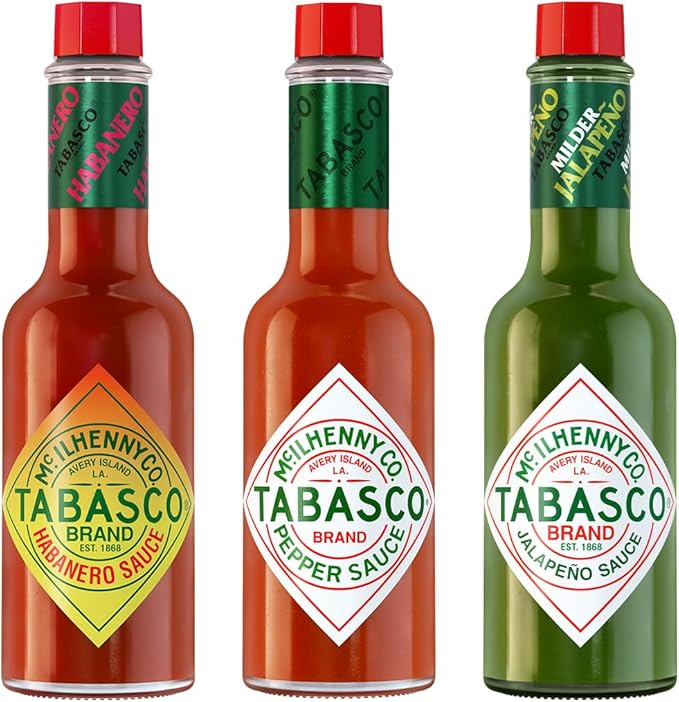
Edmund McIlhenny first started selling Tabasco sauce from his plantation on Avery Island, Louisiana in 1868. Today his hot pepper sauce, which is a key ingredient in the Bloody Mary cocktail, is sold in 195 countries and territories.
THE STORY
In the 1840s, there was a war between Mexico and the United States, and there were two battles in the Mexican province of Tabasco. After the war, an American soldier took some capsicum peppers from Tabasco back home and he gave them to his friend, Edmund McIlhenny, who decided to plant the seeds on Avery Island.
THE CIVIl WAR
In the 1860s, there was another war: the American Civil War. Union forces invaded Avery Island, which also had important salt mines. The McIlhenny family fled to Texas. When they returned, the plantation was in ruins: there was nothing, except for the crop of Tabasco peppers. Edmund McIlhenny needed to make money and so he started producing ‘Tabasco Sauce’.
THE PRODUCTION PROCESS
All of the world’s Tabasco is still produced on Avery Island today. The peppers are picked by hand. They are then macerated in wooden barrels which already contain Tabasco sauce. These barrels are protected from the air by a layer of salt. Three years later, McIlhenny company employees open the barrels and add vinegar. The sauce is mixed again and placed in bottles.
RECYCLING
The McIlhenny company saves money and resources by using second-hand barrels. Some of them are provided by another famous Southern firm: the Jack Daniels whiskey distillery in Tennessee. This certainly adds to the taste! After production, the barrels are used a third time, as firewood.
Tabasco Facts And Tips
Tabasco Pepper Sauce is packaged in 36 different languages and dialects and is distributed in 195 countries and territories worldwide.
Japan is the the second largest Tabasco Pepper Sauce consumer in the world (after the USA). The most common usage there is for pizza and spaghetti.
According to some doctors, a bit of Tabasco Sauce in your tomato juice or soup may help alleviate congestion if you’re not feeling very well.
Make sure you take a mini bottle when flying. There is nothing like Tabasco Sauce for improving airline food!
if you go…
Avery Island isn’t really an island: it is a ‘salt dome’ on the Louisiana gulf Coast, 225 km west of New Orleans. Here you will find the world’s only Tabasco factory and bottling plant.
Avery Island is also a natural paradise with exotic plants and a bird sanctuary. But please be careful: it is also home to a few alligators!
GLOSSARY
sauce: salsahot pepper: pimiento picante, guindilla
key: clave
seeds: semillas
salt mines: salinas
to flee: huir
crop: cosecha
all of the world’s: de todo el mundo
to pick: recoger
wooden barrels: barriles de madera
layer: capa
employees: empleados, trabajadores
to save: ahorrar
to provide: suministrar
firm: compañía, empresa
firewood: leña
salt dome: mina de sal
Comentarios recientes