Inicio » Listenings
Archivo de la categoría: Listenings
Useful Classroom Expressions in English
(How to give opinions, ask questions, and participate with confidence)
Learning English is not just about understanding…
it’s about participating, asking questions, and expressing yourself.
Many students know the answer, but they don’t know how to say it in class.
Here are some essential expressions you can start using today

Giving your opinion
Use these when you want to share your ideas:
- I think that…
→ Yo pienso que… - In my opinion…
→ En mi opinión… - I believe…
→ Yo creo que… - From my point of view…
→ Desde mi punto de vista… - I agree / I disagree
→ Estoy de acuerdo / No estoy de acuerdo
Asking for information or clarification
Don’t stay quiet if you don’t understand:
- Can you explain that again?
→ ¿Puedes explicar eso otra vez? - What do you mean?
→ ¿Qué quieres decir? - Could you give an example?
→ ¿Podrías dar un ejemplo? - What does this mean?
→ ¿Qué significa esto? - How do you say ___ in English?
→ ¿Cómo se dice ___ en inglés?
Asking someone to repeat
Very useful in live classes:
- Can you repeat that, please?
→ ¿Puedes repetir eso, por favor? - Sorry, I didn’t understand.
→ Perdón, no entendí. - Could you speak more slowly?
→ ¿Puedes hablar más despacio? - Can you say that one more time?
→ ¿Puedes decir eso otra vez?
Participating or interrupting politely
- Can I say something?
→ ¿Puedo decir algo? - I have a question.
→ Tengo una pregunta. - Excuse me…
→ Disculpa… - Can I add something?
→ ¿Puedo agregar algo?
Important tip
You don’t need to speak perfectly to participate.
The goal is to communicate and build confidence.
Every time you use these expressions:
✔️ you improve your fluency
✔️ you gain confidence
✔️ you learn faster
Alternatives to “I’m fine” in English
When someone asks “How are you?”, many learners automatically answer “I’m fine.” While correct, it can sound repetitive or unnatural. Native speakers often use a variety of expressions depending on their mood, the situation, or the level of formality.
Here are some useful alternatives, with translations into Spanish:

Positive and Natural Responses
- Pretty good, thanks. → Bastante bien, gracias.
- I’m doing well. → Estoy bien / Me va bien.
- I’m great, thanks for asking. → Estoy muy bien, gracias por preguntar.
- Things are going really well. → Las cosas van muy bien.
Neutral or Casual Responses
- Not too bad. → No tan mal / Bastante bien.
- I’m doing alright. → Estoy bien / Todo en orden.
- I’m okay. → Estoy bien.
- Same as always. → Como siempre.
More Colloquial Responses
- Can’t complain. → No me puedo quejar.
- I’m hanging in there. → Aquí voy / Estoy aguantando.
- I’m getting by. → Me las arreglo / Voy saliendo adelante.
Enthusiastic Responses
- Fantastic! → ¡Fantástico!
- Couldn’t be better. → No podría estar mejor.
- I’m wonderful. → Estoy de maravilla.
Practical Tip
After answering, it’s polite and natural to return the question:
- How about you? → ¿Y tú?
- What about you? → ¿Y tú qué tal?
This keeps the conversation flowing and makes you sound more like a native speaker.
Different Ways to Say Hello in English
Greeting people in English is more than just saying “Hello.” Native speakers use a variety of expressions depending on the situation—formal, informal, or casual. Here’s a practical guide with examples you can use every day.

Basic Greetings
- Hello!
- Hi!
- Good morning.
- Good afternoon.
- Good evening.
Informal and Everyday Greetings
- Hey!
- What’s up?
- How’s it going?
- How are you doing?
- Yo!
Formal Greetings
- How do you do?
- It’s nice to meet you.
- Pleased to meet you.
- Good to see you.
- How have you been?
Special Occasion Greetings
- Happy birthday!
- Congratulations!
- Happy holidays!
- Welcome!
Practical Tip
After greeting someone, it’s common to add a short follow-up question to keep the conversation flowing:
- How about you?
- What about you?
This makes your interaction sound more natural and polite.
ART IN HEART IN LA
Reading
See more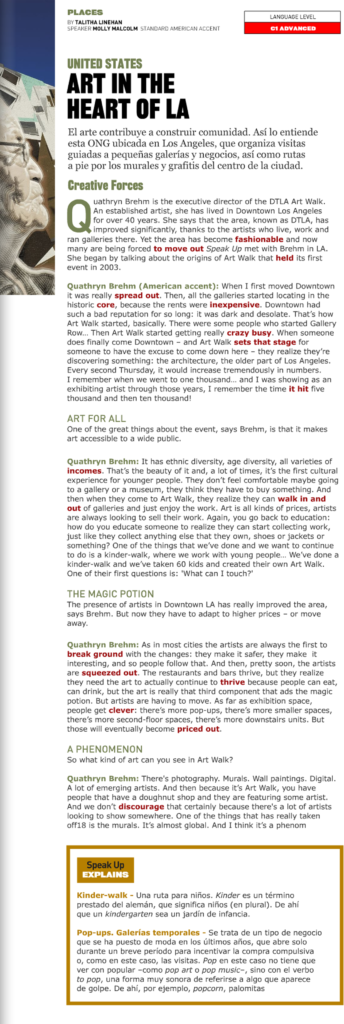
Task 1
See more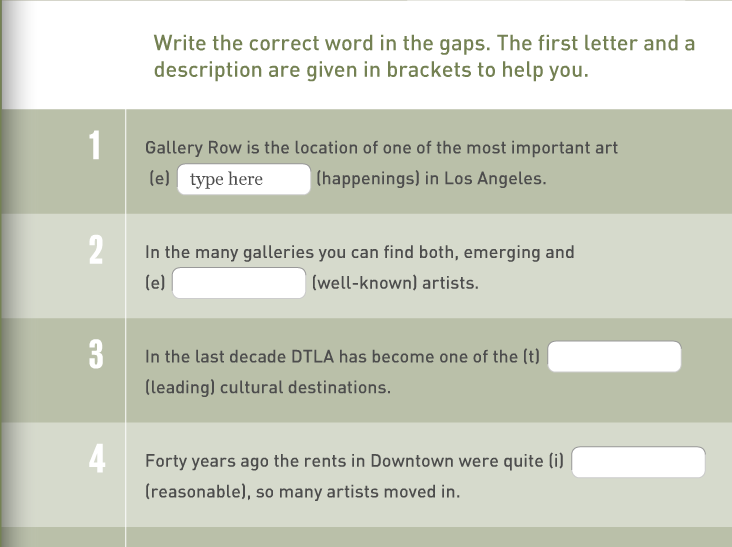
Task 2
See more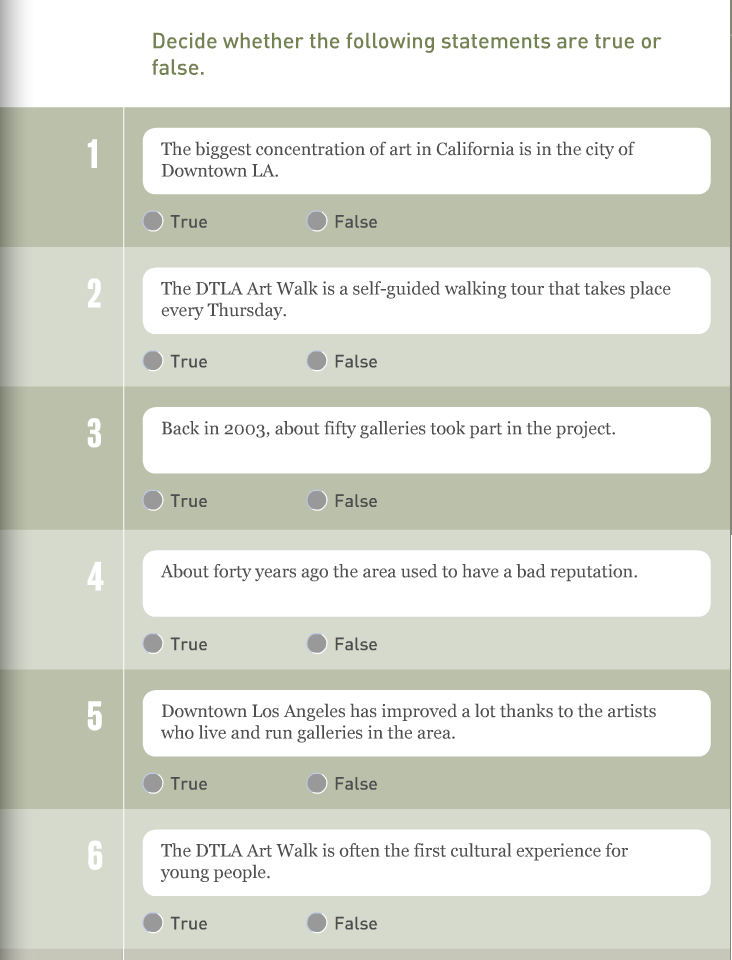
Task 3
See more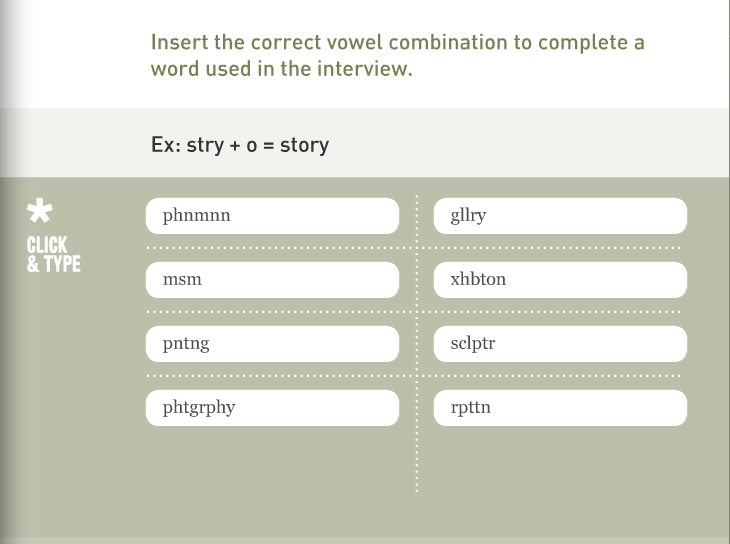
BITCOIN
Reading
See more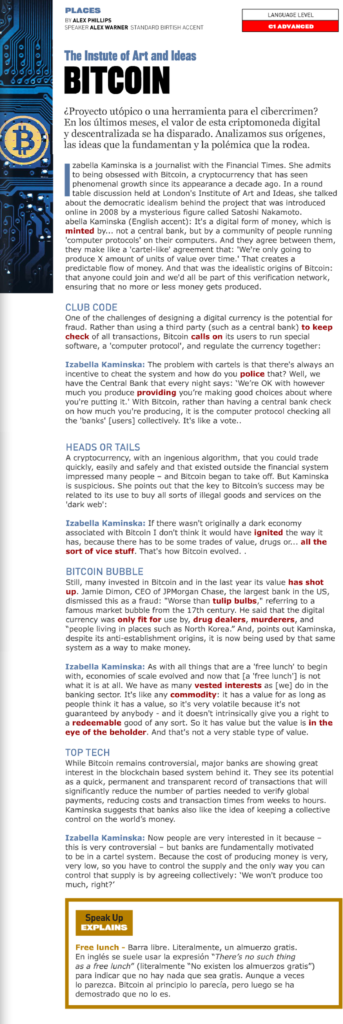
Exercises
Task 1
See more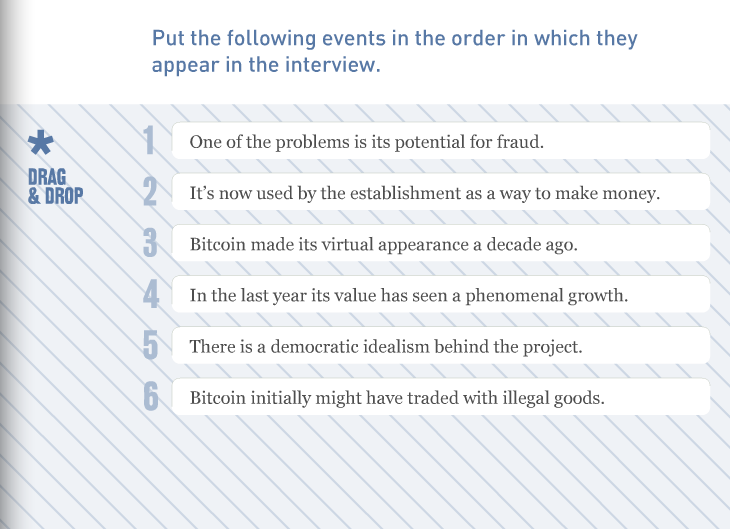
Task 2
See more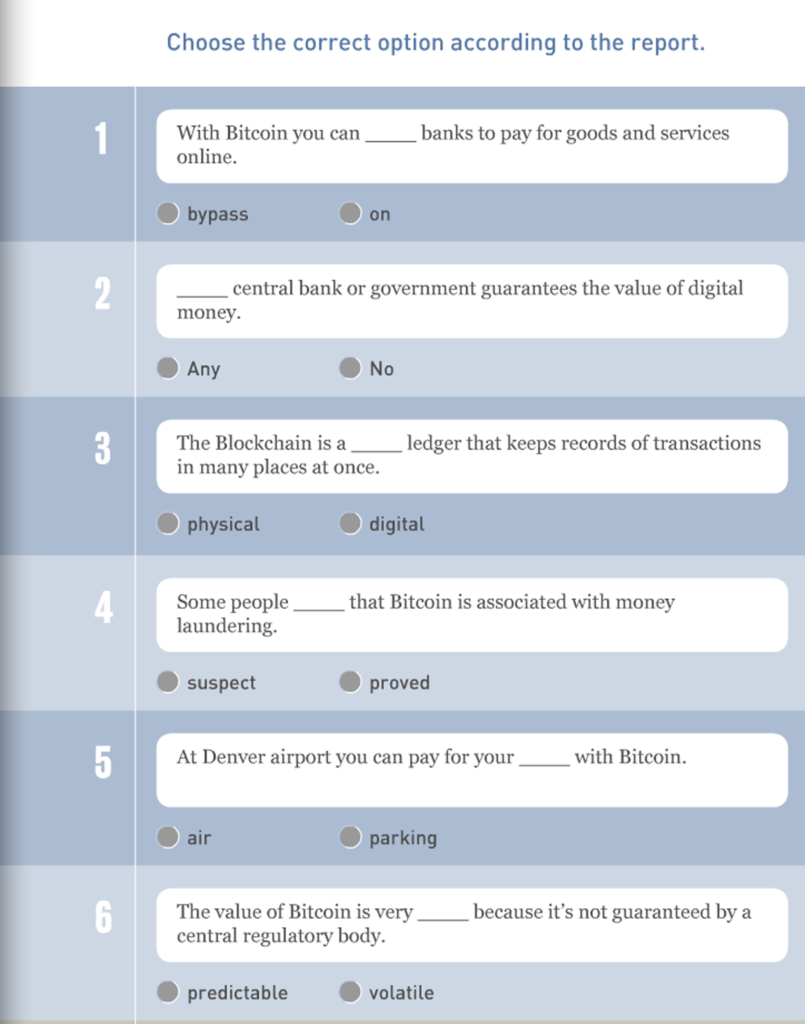
Task 3
See more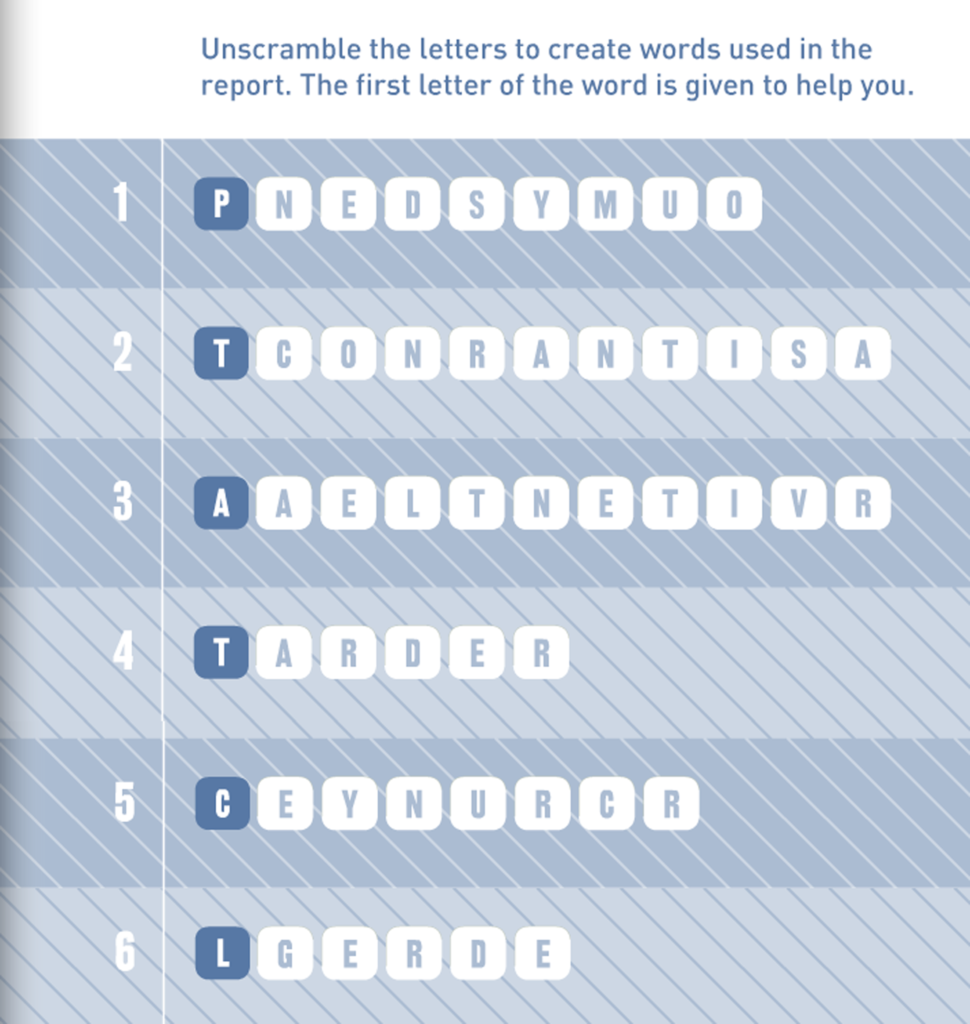
REWRITING THE RULES
Reading
See more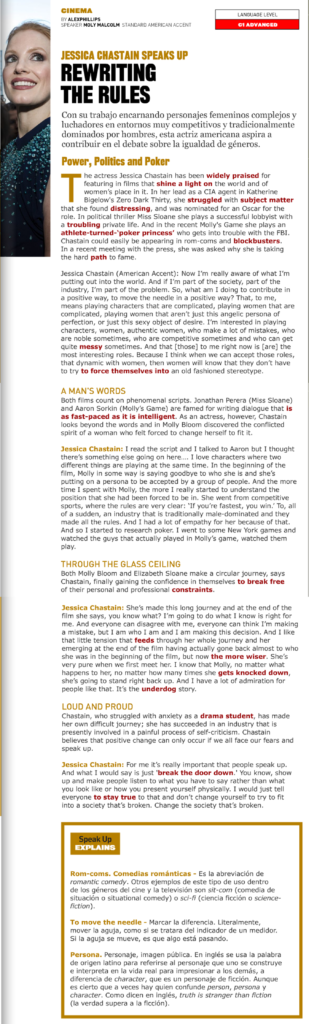
Exercise
See more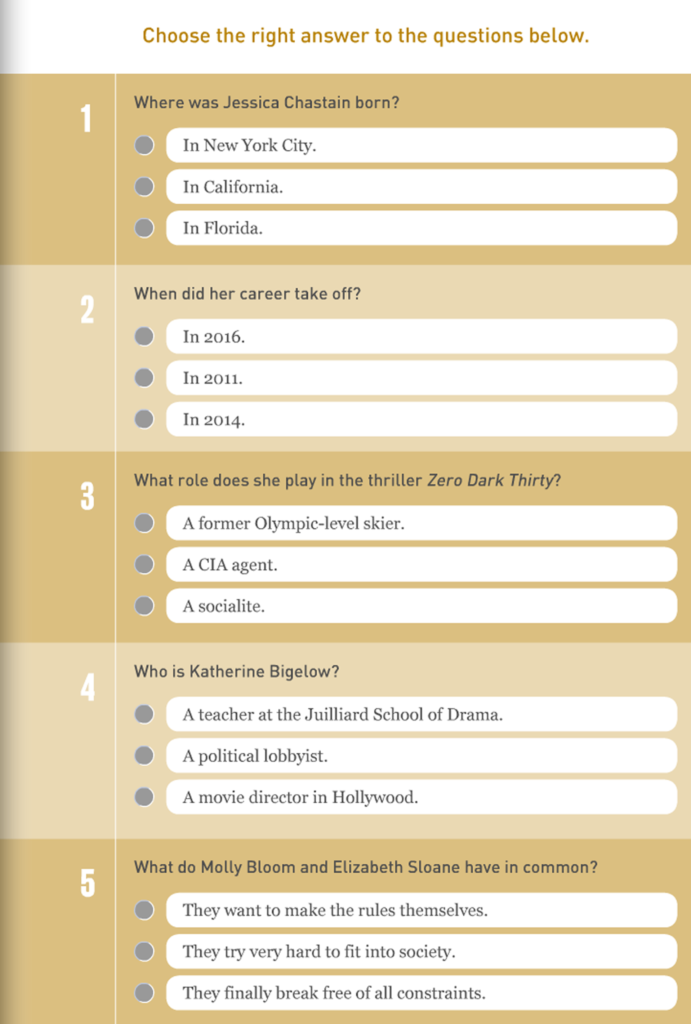
THE SEEDS OF LIFE
Reading
See more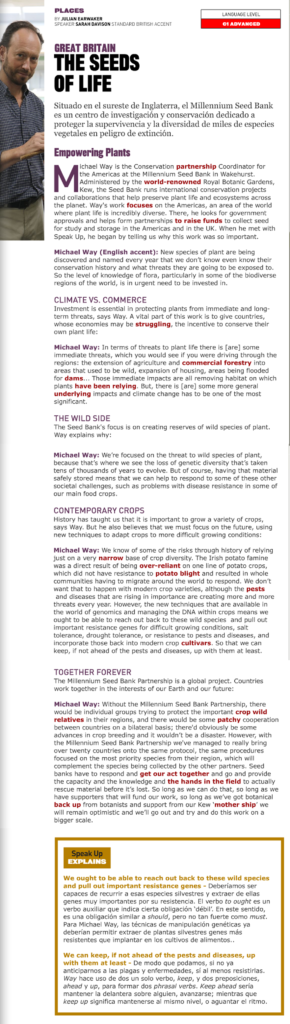
Exercise
See more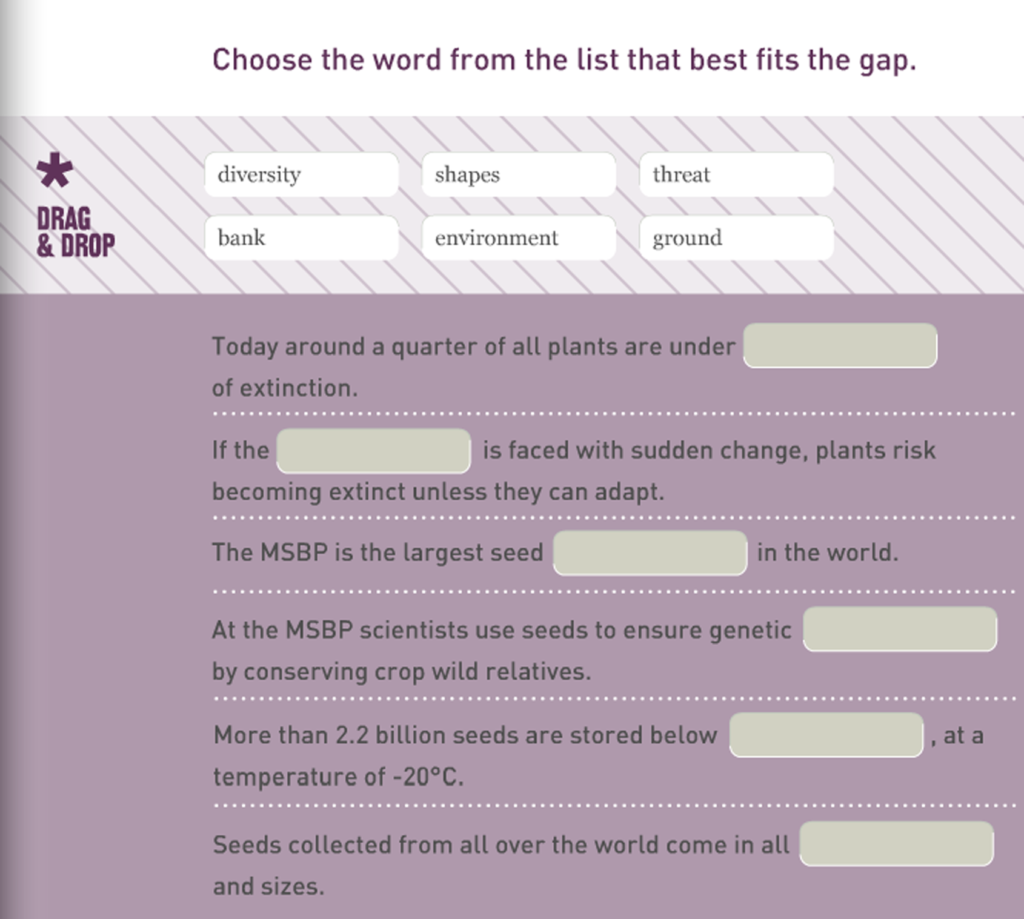
YES, OPRAH CAN!
Reading
See more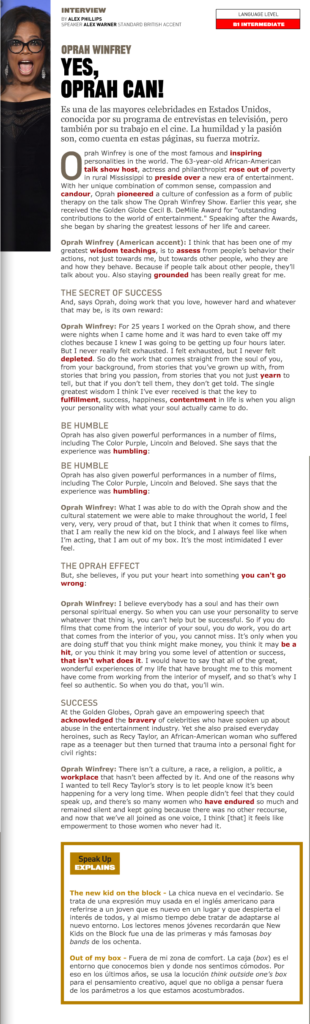
Exercise
See more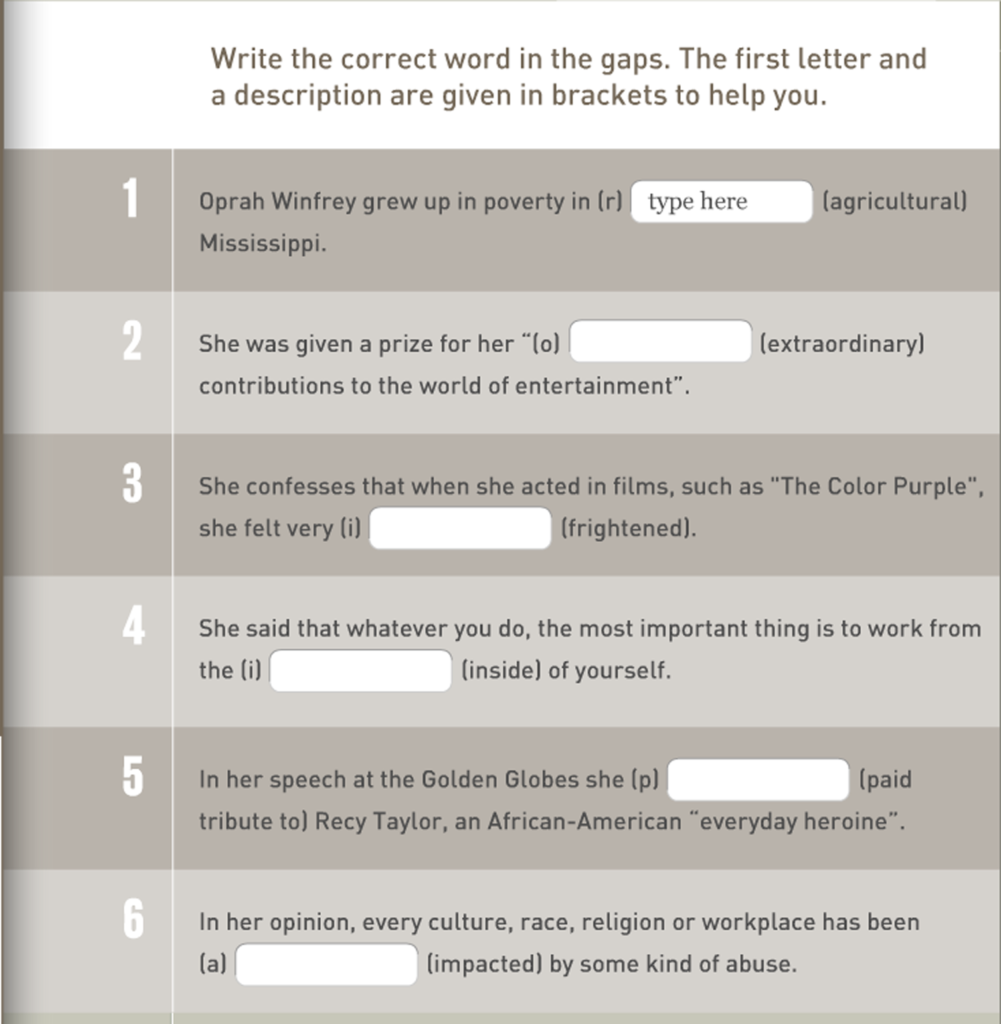
COLLISION COURSE
Reading
See more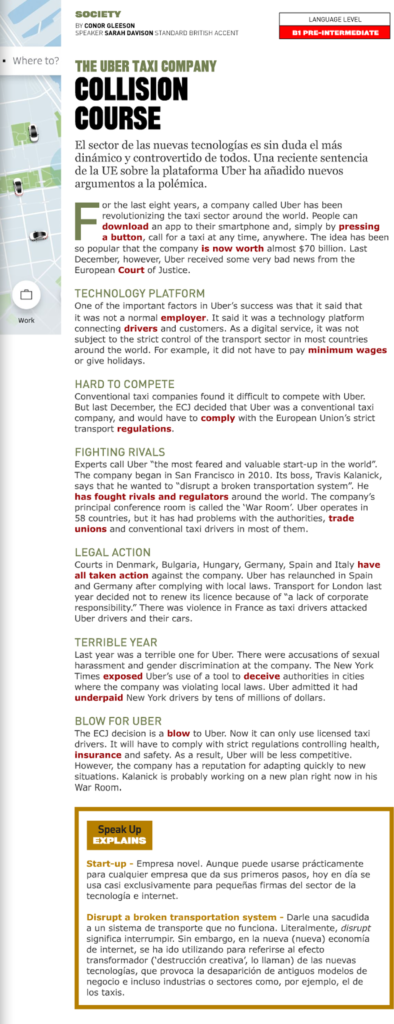
Exercises
See more
ST PATRICK´S DAY IN AMERICA
Reading
See more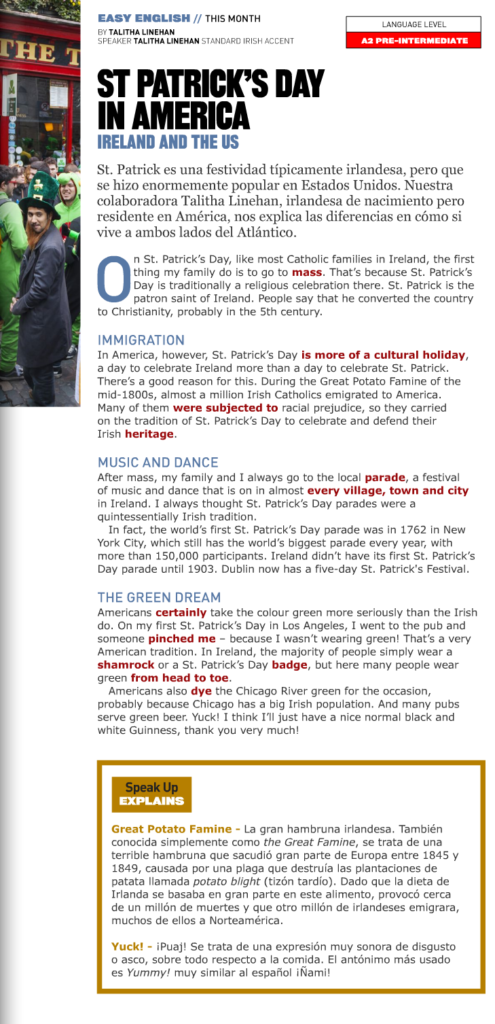
Exercises
See more
Comentarios recientes